Buy GW 501516 Cardarine 30 ml – Research Material for Laboratory Studies
GW 501516, commonly known as Cardarine or GW501516, is a synthetic small molecule studied as a selective agonist of peroxisome proliferator-activated receptor delta (PPARδ). Scientific literature has examined its interaction with PPARδ. Because the compound remains an experimental research chemical, its laboratory investigation should be separated clearly from claims about human treatment, fitness enhancement, or medical use.
What Is GW 501516 Cardarine?
GW501516 is a synthetic PPARδ agonist investigated in pharmacology and molecular biology. Early research explored how selective PPARδ activation can influence pathways involved in lipid homeostasis, fatty-acid utilisation, cholesterol transport, and energy-related gene expression. A PubMed-indexed study reported that GW501516 activates PPARβ/δ and alters expression of genes associated with lipid utilisation and fatty-acid oxidation in skeletal muscle cells. These findings provide a useful basis for controlled laboratory investigations into receptor signalling and metabolic pathways. (PubMed)
Researchers should interpret such findings carefully. Results obtained in cell or animal models do not establish equivalent effects, safety, or therapeutic value in people. Cardarine has also attracted attention in sports because it is prohibited under anti-doping rules, making responsible research documentation important. (PubMed)
Research Applications
Laboratories may investigate GW501516 as a pharmacological tool for studying PPARδ signalling. Potential research areas include receptor activation, transcriptional regulation, lipid metabolism, mitochondrial and energy-related pathways, and cellular responses to experimental treatment conditions.
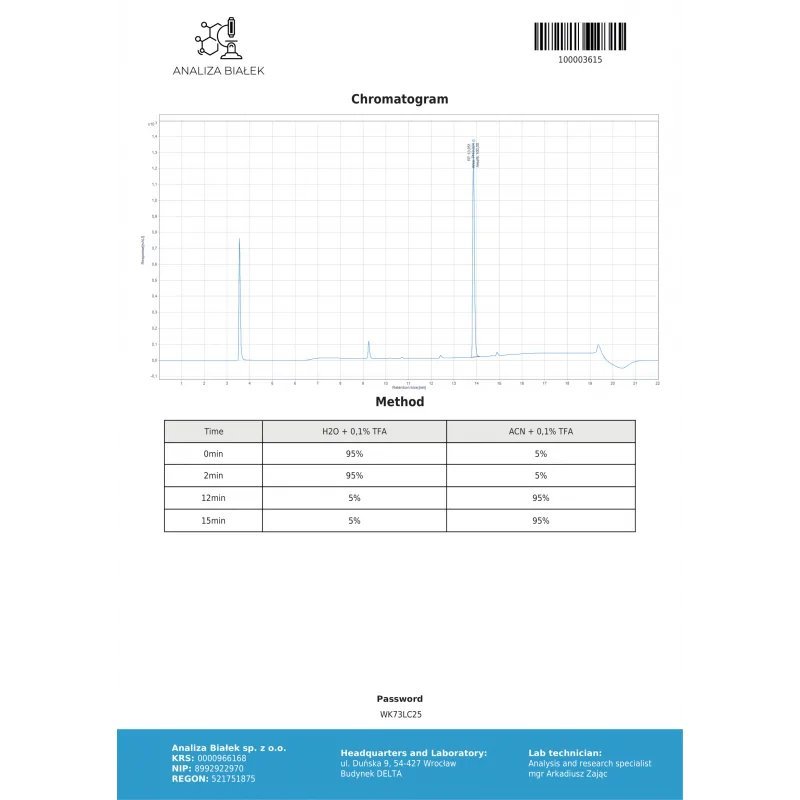
The compound can also support analytical chemistry projects. Researchers may examine identity, purity, stability, formulation characteristics, degradation behaviour, and analytical detection using suitable validated laboratory techniques. Published analytical work has investigated Cardarine using chromatographic and mass-spectrometric approaches, demonstrating the relevance of rigorous analytical methods when identifying the compound.
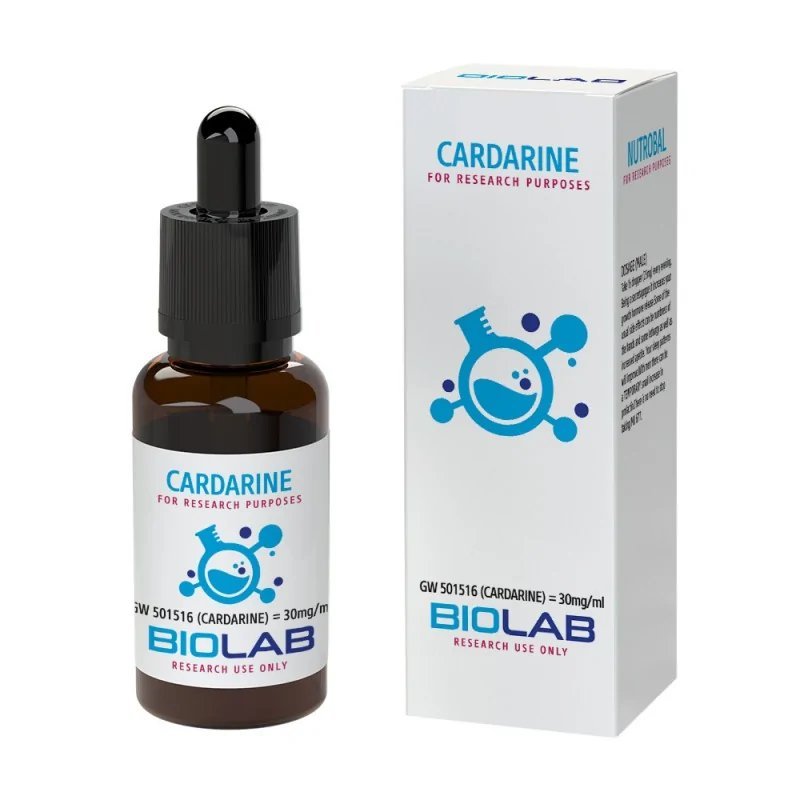
Product Format: 30 ml
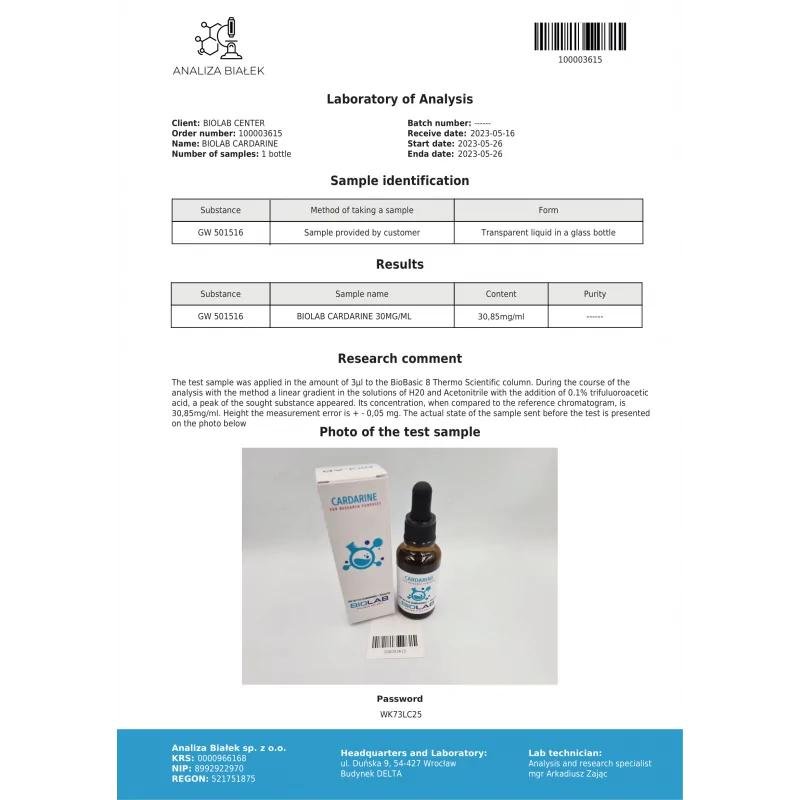
This 30 ml format is intended to provide a research material for laboratories requiring a defined product presentation. Before beginning an experiment, researchers should verify the product label, concentration information, batch documentation, storage requirements, and certificate of analysis supplied with the material.
The stated volume should not be interpreted as a recommended human-use quantity. Experimental materials require protocol-specific preparation determined by qualified researchers and institutional procedures. No human dosing or administration guidance is provided here.
Why Study PPARδ Signalling?
PPARδ belongs to a family of nuclear receptors that regulate gene expression in response to metabolic signals. Research involving selective ligands can help investigators understand receptor biology and downstream molecular responses. Published studies have examined PPARδ-dependent changes in skeletal muscle cells, vascular models, and other experimental systems. (PubMed)
Such work can contribute to broader investigations into transcriptional regulation, lipid handling, cellular metabolism, and receptor-selective pharmacology. However, experimental observations should remain within their scientific context and should not be presented as evidence that an unapproved research chemical is suitable for treating disease or improving athletic performance.
Quality Considerations for UK Researchers
For laboratory work, material traceability is an important part of responsible research. When sourcing an experimental compound, consider whether the supplier provides a batch or lot identifier, certificate of analysis, stated purity, manufacturing information, and appropriate documentation.
UK researchers should also consider institutional chemical-handling policies, laboratory risk assessments, and applicable regulatory requirements. A product described as a research chemical should not automatically be assumed to be authorised as a medicine in the United Kingdom. Clear product classification and accurate website language help reduce confusion between laboratory materials and licensed medicinal products.
Laboratory Handling and Storage
Researchers should follow the supplier’s technical documentation and their own laboratory standard operating procedures for handling, storage, preparation, and disposal. Appropriate personal protective equipment, controlled access, suitable labelling, and contamination-prevention measures should be selected according to the substance and experimental setting.
Avoid transferring research materials into unlabelled containers. Maintain batch records and document experimental conditions so results can be reproduced and reviewed. If stability is being investigated, use validated analytical methods and defined environmental conditions rather than relying on visual appearance alone or indirectly.
Choosing a Research Supplier
A reliable supplier should provide transparent product information and documentation that supports laboratory traceability. Look for clear identification, consistent labelling, accessible quality documentation, and customer support capable of answering technical questions.
For UK laboratory customers, accurate descriptions are especially valuable. Search terms such as GW501516 research material, PPARδ research compound, Cardarine laboratory chemical, and experimental receptor ligand can help researchers find relevant information without implying therapeutic use.
Order GW 501516 Cardarine 30 ml for Laboratory Research
If your laboratory is evaluating PPARδ receptor biology, analytical chemistry, or related metabolic signalling pathways, a documented research material can support structured experimental work. Review specifications before purchasing and confirm that the material is appropriate for your intended laboratory protocol.
This product description is written for research-focused use and does not recommend Cardarine for consumption, sport, weight management, disease treatment, or any other human application. GW501516 is an experimental compound, and published findings should be evaluated critically in their original scientific context.
Important Research Disclaimer
GW501516/Cardarine is presented here solely as an experimental research material. It does not establish safety or efficacy for human or veterinary use. Do not use this material for diagnosis, treatment, cure, prevention of disease, performance enhancement, or self-administration. Researchers are responsible for following applicable UK requirements, institutional procedures, laboratory safety rules, and appropriate waste-disposal practices. Experimental results should not be interpreted as clinical recommendations.