

VIP 5 mg – Research Peptide Information for the UK
Vasoactive intestinal peptide (VIP) is a naturally occurring neuropeptide that has become an interesting subject in laboratory research involving neuroendocrine signalling, vascular biology, gastrointestinal pathways and cellular communication. Researchers continue to investigate how this 28-amino-acid peptide interacts with specific receptors and signalling systems.
For people searching for Buy VIP 5 mg, it is important to distinguish laboratory research material from an approved medicinal product. A product described as VIP 5 mg should not be presented as a treatment for a medical condition or as a medicine authorised for routine human use in the United Kingdom. UK regulatory requirements apply to products that are presented with medicinal claims, and the MHRA considers factors including a product’s intended purpose, pharmacological properties and the claims made on websites and promotional material. (GOV.UK)
What Is VIP?
Vasoactive intestinal peptide is a peptide consisting of 28 amino acids. It is naturally produced in the body and functions as a signalling molecule. Scientific research has identified two principal receptors associated with VIP activity: VPAC1 and VPAC2.
These receptors belong to the G-protein-coupled receptor family and are distributed across several tissues. Consequently, VIP research can involve multiple areas of biological science, including smooth-muscle signalling, gastrointestinal physiology, vascular responses and neuropeptide communication.
Because the molecule participates in several signalling pathways, researchers use experimental models to investigate its biological characteristics and receptor interactions.
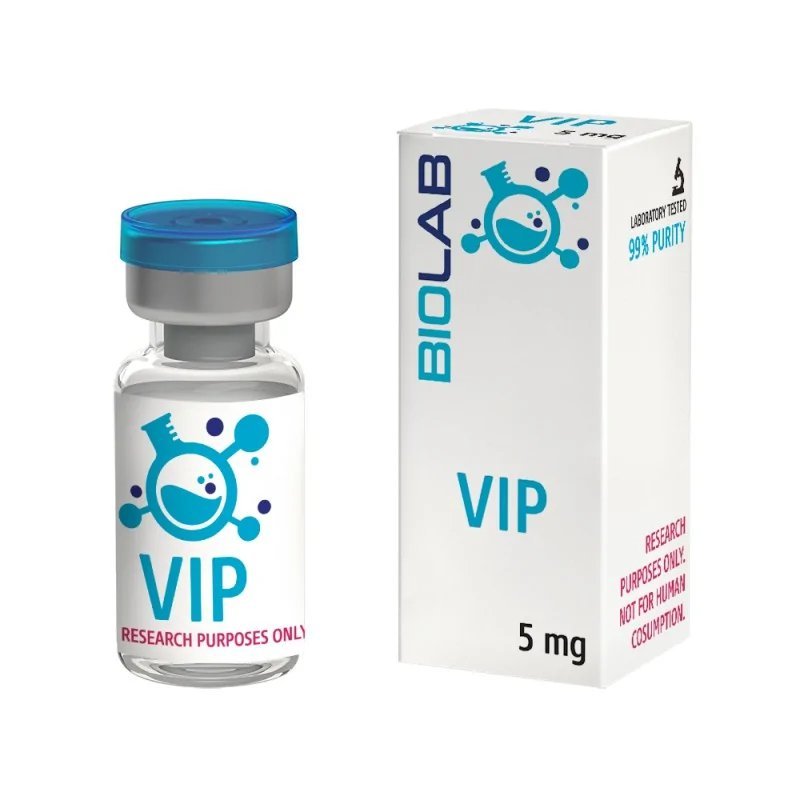
VIP 5 mg Research Material
A 5 mg specification refers to the stated quantity of peptide contained within a research preparation. It should not be interpreted as a recommended human dose, treatment schedule or clinically established strength.
Laboratory researchers evaluating peptide material may consider several quality-related factors. These can include peptide identity, stated purity, batch information, analytical documentation, storage conditions and the manufacturer’s quality-control procedures.
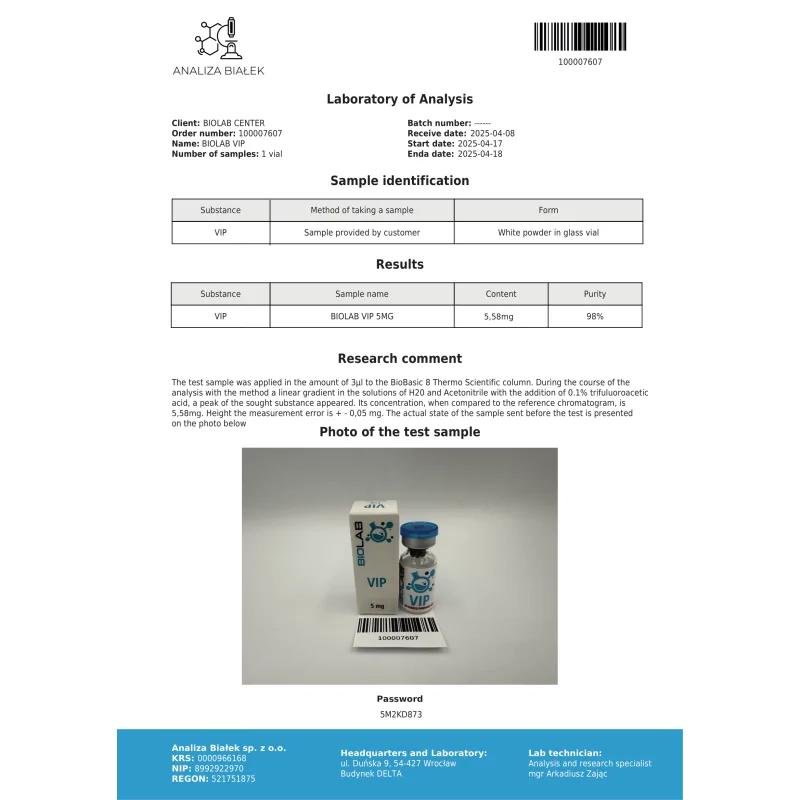
Analytical techniques such as high-performance liquid chromatography (HPLC) and mass spectrometry can be used to evaluate peptide purity and identity. Appropriate documentation can help researchers understand the characteristics of a particular batch before incorporating research material into laboratory protocols.
Research Applications
VIP is studied across several areas of experimental biology. One important area involves receptor signalling. Researchers can examine how the peptide interacts with VPAC1 and VPAC2 and how those interactions influence downstream cellular pathways.
Additional research areas include vascular biology and smooth-muscle signalling. Experimental work can help scientists investigate mechanisms involved in cellular communication and physiological regulation.
Gastrointestinal research is another field in which VIP biology has attracted scientific interest. Researchers can study peptide signalling in experimental systems to better understand interactions between neuropeptides and gastrointestinal processes.
These research areas should not be interpreted as evidence that commercially available peptide material is an established therapy. Laboratory findings require appropriate clinical research before conclusions about human medical benefits can be made.
Quality Considerations for Researchers
Researchers sourcing VIP material should focus on transparency and documentation rather than unsupported promotional claims. Useful information may include the exact peptide name, molecular information, batch identification, stated quantity and available analytical testing.
Certificates of analysis can provide additional information about a specific batch. Where HPLC or mass-spectrometry results are supplied, researchers can use those documents as part of their broader quality-assessment process.
Storage information is also relevant because peptide stability can be affected by environmental conditions. Research laboratories should follow appropriate handling procedures and their own institutional protocols.
UK Regulatory Considerations
UK rules governing medicinal products are important when publishing or marketing information about peptide products. The MHRA explains that an unlicensed medicine has not received a UK marketing authorisation and may not have undergone the same assessment as an authorised medicine. (GOV.UK)
The MHRA also states that medicines without a UK licence cannot be advertised, while prescription-only medicines cannot be advertised directly to the general public. (GOV.UK)
For this reason, UK-facing website content should avoid statements suggesting that an investigational peptide can diagnose, prevent or treat disease unless the relevant regulatory requirements have been satisfied.
Why Researchers Study VIP
Interest in VIP comes from its role as a naturally occurring signalling peptide and its interaction with VPAC1 and VPAC2 receptors. Its biology provides researchers with opportunities to investigate neuropeptide signalling, receptor activity and communication between different cellular systems.
Rather than relying on broad health claims, researchers can examine peer-reviewed literature and experimental findings to understand what is known about the molecule and where further investigation is required.
Frequently Asked Questions
What does VIP stand for?
VIP stands for vasoactive intestinal peptide. It is a naturally occurring 28-amino-acid neuropeptide involved in biological signalling.
What does 5 mg mean?
The 5 mg designation describes the stated quantity of research material. It does not establish a human dosage or medical recommendation.
What receptors are associated with VIP?
The principal receptors associated with VIP signalling are VPAC1 and VPAC2, both of which are G-protein-coupled receptors.
Is VIP an approved UK medicine?
A research-peptide listing should not be confused with a UK marketing authorisation. UK medicinal products are subject to regulatory requirements, and unlicensed products should not be promoted to the public as authorised medicines. (GOV.UK)
How should researchers evaluate peptide quality?
Researchers can consider documentation covering identity, purity, batch traceability, analytical testing and storage. Independent verification may also be appropriate depending on the laboratory application.
Conclusion
VIP remains an interesting subject for research into neuropeptide signalling, receptor biology, vascular pathways, gastrointestinal physiology and smooth-muscle communication. A 5 mg specification describes research material rather than an established therapeutic dose.
For UK audiences searching for Buy VIP 5 mg, responsible content should clearly distinguish experimental research from authorised medical treatment. Accurate scientific descriptions, transparent quality information and compliance with UK regulatory requirements provide a stronger foundation for trustworthy peptide-related content than unsupported health or therapeutic claims.


