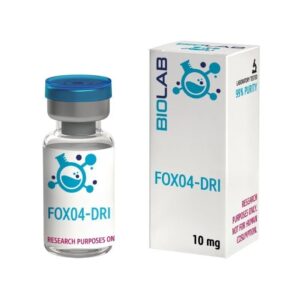
Buy Matrixyl 20 mg – UK Research Material for Peptide Studies
Matrixyl is a recognised name associated with cosmetic peptide technology and peptide-based formulation research. A 20 mg presentation can be relevant to laboratories, cosmetic formulators, analytical researchers, and developers investigating peptide ingredients and their behaviour in experimental formulations. This UK-focused product description uses factual language and does not present the material as a medicine or make unsupported claims about treating medical conditions.
What Is Matrixyl?
Matrixyl is a commercial name used for peptide-based cosmetic ingredients, with different Matrixyl products containing different peptide compositions. Commonly discussed Matrixyl technologies include palmitoyl tripeptide-1 and palmitoyl tetrapeptide-7, while other generations use different peptide sequences. Consequently, researchers should always verify the precise composition of a particular product before beginning an experiment.
Scientific literature recognises cosmetic peptides as an expanding area of formulation research. A recent review examined commercially available cosmetic peptides and described research into their potential biological activities using in-vitro and ex-vivo models. (PubMed)
The precise composition of a laboratory material should be established from its technical documentation rather than inferred from the commercial name alone.
Research Applications
Laboratories can investigate peptide ingredients through analytical chemistry, formulation science, cosmetic science, peptide characterisation, and stability research. Experimental projects may examine identity, purity, molecular characteristics, compatibility with formulation ingredients, degradation behaviour, and changes under different storage conditions.
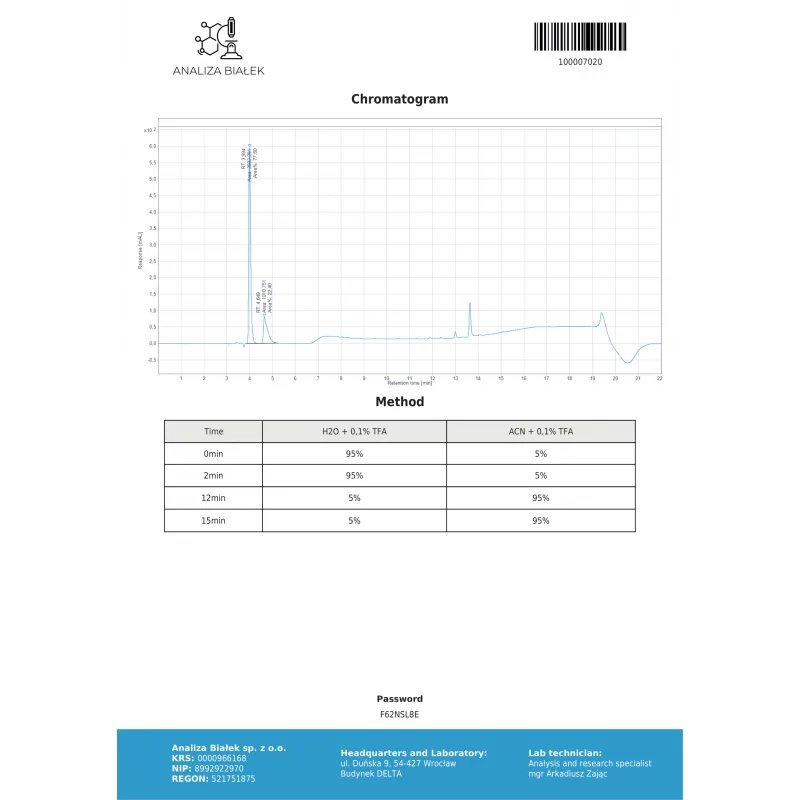
Researchers may also compare peptide-containing formulations using controlled analytical procedures. Chromatographic techniques, spectroscopy, mass spectrometry, and other validated approaches can be selected according to the research objective.
Published research has investigated combinations containing palmitoyl tripeptide-1 and palmitoyl tetrapeptide-7 in cosmetic formulations, including laboratory models and controlled cosmetic research. However, evidence from a particular formulation should not automatically be applied to every product sold under a similar commercial name. (PubMed)
20 mg Product Format
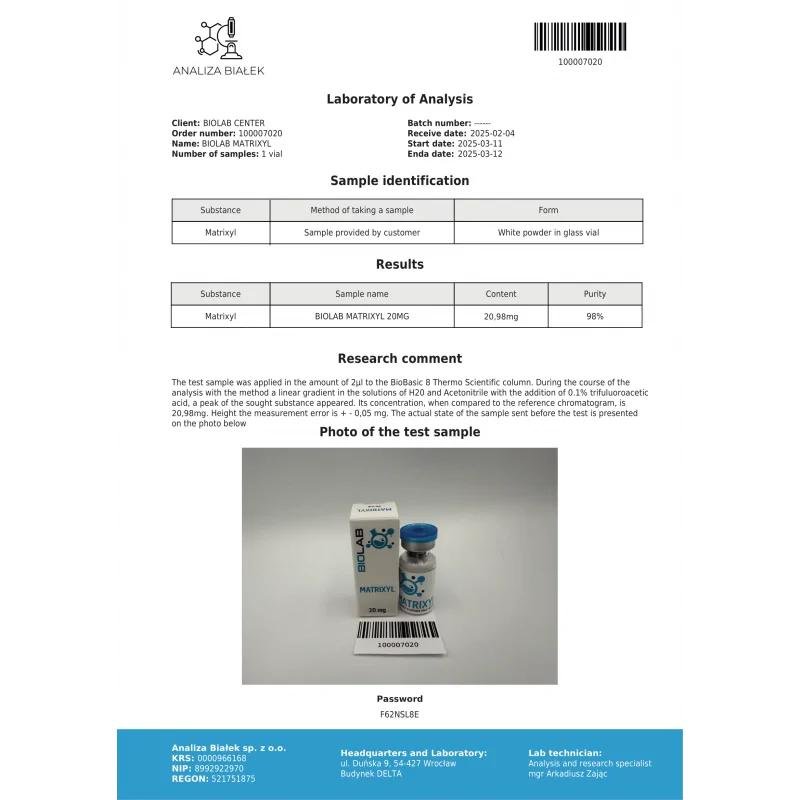
The 20 mg format provides a defined quantity for laboratory or formulation research. Before purchasing, researchers should review the complete product specification, including the exact peptide identity, composition, batch information, purity information, certificate of analysis, and recommended storage conditions.
The stated quantity refers to the amount supplied and should not be interpreted as a recommended human dose or administration instruction. This page does not provide instructions for injection, ingestion, or personal use.
For formulation projects, researchers should establish appropriate concentrations and experimental conditions through their own validated protocols.
Why Study Cosmetic Peptides?
Peptide research is an important area of modern cosmetic science. Researchers investigate short peptide sequences because their structures can provide useful models for studying molecular interactions, formulation stability, and biological signalling in controlled experimental environments.
Matrixins and matrikine-related peptides have received scientific attention because certain peptide fragments can participate in extracellular-matrix research. A systematic review noted that peptides associated with extracellular-matrix synthesis are widely incorporated into cosmetic formulations, while also highlighting uncertainty surrounding the clinical evaluation of many cosmetic peptide products. (PubMed)
This distinction is important for responsible SEO content. Laboratory evidence, cosmetic-formulation research, and clinical evidence are different categories and should not be presented as interchangeable.
Quality Considerations for UK Researchers
Reliable sourcing begins with clear product identification. Researchers should look for accurate naming, complete composition information, batch or lot numbers, certificates of analysis, stated purity, and suitable technical documentation.
If the material is intended for formulation research, additional information about solubility, compatibility, stability, and analytical characteristics may be useful. Independent testing can also be considered where project requirements call for additional verification.
UK websites should avoid presenting experimental or cosmetic ingredients as authorised medicines. MHRA guidance states that medicines without the necessary UK authorisation cannot be advertised, and promotional information on company websites can fall within medicines-advertising requirements. (GOV.UK)
Laboratory Handling and Storage
Researchers should follow the supplier’s technical documentation and their organisation’s laboratory procedures. Storage conditions should be selected according to the documented properties of the specific peptide material rather than generic assumptions.
Maintain clear records covering product identity, batch information, storage conditions, preparation, analytical procedures, and experimental observations. Researchers should also use appropriate laboratory risk assessments, protective equipment, labelling, and contamination-control procedures.
Where stability is being assessed, controlled environmental conditions and validated analytical methods can help produce reproducible results.
Choosing a Research Supplier
A dependable supplier should provide transparent product information and documentation that supports traceability. Researchers can assess suppliers by reviewing product specifications, batch records, analytical documentation, packaging information, and customer support.
For UK SEO, related terms can be incorporated naturally, including cosmetic peptide research, Matrixyl peptide material, peptide formulation research, palmitoyl peptide research, laboratory peptide studies, cosmetic ingredient analysis, and experimental peptide material. Using semantically related terminology is preferable to repeating a single commercial phrase excessively.
Order Matrixyl 20 mg for Laboratory Research
Laboratories and cosmetic formulation researchers evaluating peptide ingredients may require clearly identified materials with supporting documentation. Before ordering, confirm the exact peptide composition and ensure that the supplied material matches the requirements of the intended research project.
This content does not recommend the material for treating wrinkles, skin disease, ageing, inflammation, or any other medical condition. Research findings should be interpreted according to the specific formulation, experimental model, methodology, and available evidence.
Important UK Research Disclaimer
This material is presented for laboratory, scientific, analytical, and formulation research. It is not presented as an authorised medicine and is not intended for diagnosis, treatment, cure, prevention of disease, or self-administration. No dosing or administration instructions are provided.
Researchers and commercial formulators are responsible for complying with applicable UK requirements, institutional policies, laboratory safety procedures, product-classification rules, and appropriate documentation. Product identity and composition should always be confirmed using current supplier documentation before research or formulation work begins.