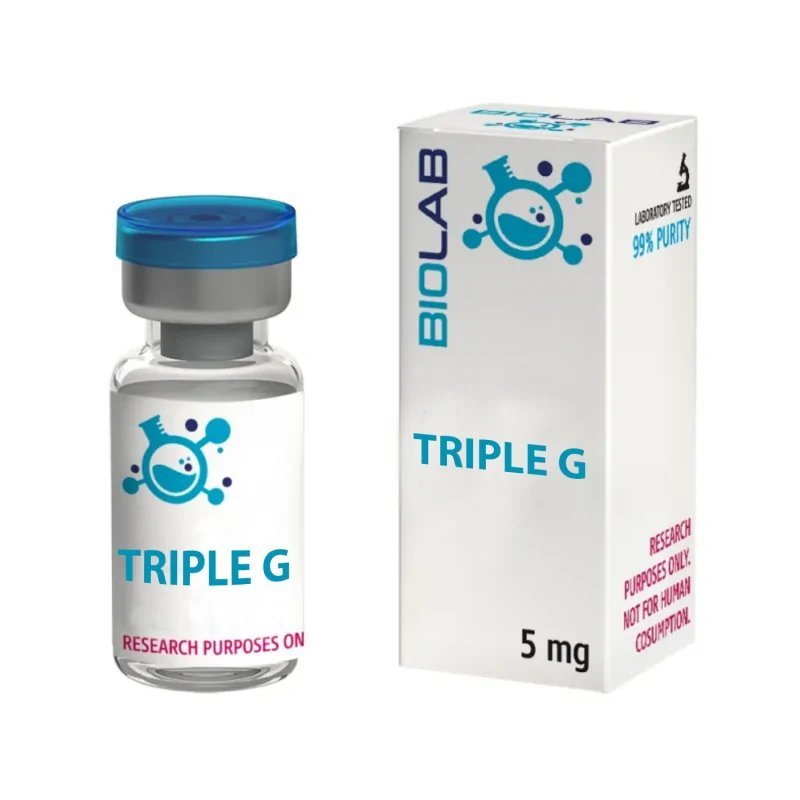
Buy Triple G 5 mg – UK Research Peptide for Laboratory Studies
Triple G is a research peptide associated with the emerging field of multi-receptor agonist research. The designation is commonly used in connection with retatrutide, an investigational peptide designed to activate three important metabolic receptors: glucagon-like peptide-1 (GLP-1), glucose-dependent insulinotropic polypeptide (GIP), and glucagon. This multi-target profile has made the compound an important subject of contemporary peptide and metabolic research. (PubMed)
For UK laboratories investigating receptor pharmacology, peptide chemistry and metabolic signalling, a 5 mg research presentation can provide a defined quantity of material for controlled scientific investigations. The product should be treated strictly as research material and should not be represented as an authorised UK medicine or as a product intended for self-administration.
What Is Triple G?
Triple G refers to a peptide research concept centred on simultaneous activation of GLP-1, GIP and glucagon receptors. Retatrutide, also known by the development code LY3437943, is the most advanced example of this triple-agonist approach in published clinical research. (PubMed)
Each receptor belongs to a different signalling pathway. GLP-1 and GIP are involved in endocrine and metabolic signalling, while glucagon participates in pathways associated with energy regulation. Researchers are interested in how simultaneous receptor activation can produce a different experimental profile from single- or dual-receptor approaches.
The combination makes this class particularly relevant to modern peptide pharmacology and receptor biology.
Research Applications
Laboratories may investigate triple-receptor agonist peptides through controlled biochemical, cellular and pharmacological research. Research can focus on receptor activity, signalling pathways, peptide structure and interactions between multiple biological targets.
Potential research areas include:
- GLP-1 receptor research
- GIP receptor investigations
- Glucagon receptor studies
- Multi-receptor pharmacology
- Peptide structure and characterisation
- Metabolic signalling research
- Receptor-binding experiments
- Analytical testing
- Comparative peptide studies
Published research has evaluated retatrutide in randomised clinical studies as well as earlier experimental programmes. These findings demonstrate scientific interest in the compound but do not mean that every research presentation available online has been evaluated or authorised for human use. (PubMed)
Triple G 5 mg Product Format
The 5 mg format provides a defined quantity of research peptide material for laboratories requiring a specified amount for experimental work. A clearly stated quantity can support research planning, analytical procedures and comparative studies.
Before using any research material, laboratories should review the supplier’s documentation and verify product identity, quantity, batch information and available analytical specifications. A certificate of analysis can be useful for assessing characteristics such as stated purity and confirming the identity of a particular batch.
Accurate laboratory records can also support reproducibility when researchers repeat experiments or compare results from different materials.
Why Study Triple-Receptor Agonists?
Triple-receptor agonists represent an interesting development in peptide research because they are designed to engage three signalling systems simultaneously. This approach differs from traditional single-target compounds and from dual agonists that combine two receptor pathways.
Research reviews identify retatrutide as the most advanced published triple agonist, with studies investigating its pharmacological profile in people with obesity and type 2 diabetes. (PubMed)
For laboratory researchers, this provides an opportunity to study how multiple receptor pathways interact. Investigations may examine receptor selectivity, downstream signalling, molecular structure and measurable responses under controlled conditions.
Experimental observations should nevertheless be interpreted carefully and should not be presented as guaranteed outcomes for individuals.
Quality Considerations for UK Researchers
UK laboratories sourcing experimental peptides should prioritise accurate product identification, transparent documentation and appropriate quality information. Researchers may wish to review available batch numbers, certificates of analysis, purity information, packaging specifications and storage guidance.
Quality documentation can help laboratories establish traceability and maintain consistent research conditions. This is particularly relevant when working with advanced peptide compounds whose properties may vary depending on formulation and manufacturing processes.
Suppliers should also distinguish research information from medicinal claims. Experimental peptide materials should not be promoted as authorised treatments unless the appropriate regulatory requirements have been met.
Laboratory Handling and Storage
Researchers should follow the supplier’s current technical documentation and their institution’s established laboratory procedures when handling this material. Storage requirements should be reviewed before use because peptide integrity can depend on environmental conditions and formulation.
Research samples should remain properly labelled and stored under recommended conditions. Any preparation, analytical testing or experimental work should be conducted by suitably trained personnel using appropriate laboratory equipment and safety procedures.
Technical documentation should take precedence over informal instructions found on websites or social media.
Choosing a Research Peptide Supplier
Selecting a research supplier involves more than comparing price and quantity. Laboratories should consider product transparency, documentation, traceability, packaging integrity and consistency of specifications.
A responsible supplier should clearly identify the research material and avoid unsupported claims concerning human treatment or guaranteed metabolic outcomes. This approach allows researchers to assess products according to scientific and technical criteria.
For UK laboratories, clear research-use labelling can also help distinguish experimental materials from medicines subject to UK marketing authorisation requirements.
Order Triple G 5 mg for Laboratory Research
Researchers searching for Triple G 5 mg may consider this presentation when their laboratory programme requires a defined quantity of a multi-receptor peptide research material. The product can be relevant to investigations involving GLP-1, GIP and glucagon receptor biology, peptide chemistry, analytical testing and experimental pharmacology.
The material should remain within an appropriate research environment and be used only according to applicable institutional procedures and laboratory requirements.
Important Research Disclaimer
This material is supplied exclusively for laboratory and scientific research purposes. It is not intended for human or veterinary use, diagnosis, treatment, cure or prevention of disease. Retatrutide remains an investigational compound, and published clinical findings should not be interpreted as evidence that an individual research product is authorised for human use in the UK. (PubMed) Researchers are responsible for complying with applicable UK regulations, institutional requirements and laboratory safety procedures.