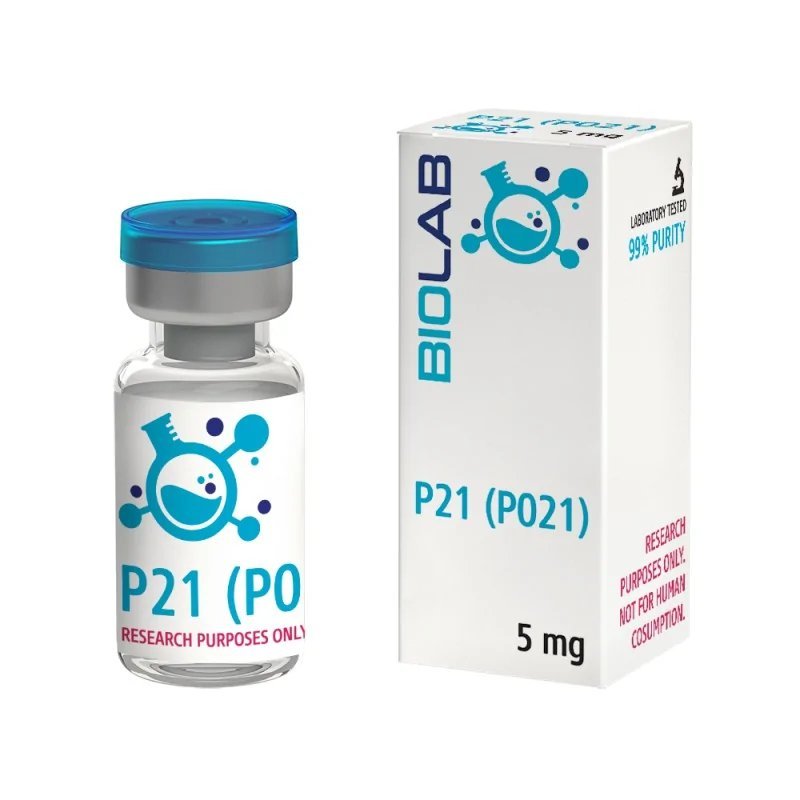
P-21 (P021) 5 mg: UK Research Information and Product Overview
P-21, also written as P021 or Peptide 021, is a small peptide-derived research compound investigated primarily in preclinical neuroscience. Research literature describes P021 as a ciliary neurotrophic factor-related mimetic studied in neuroscience. For UK audiences, product information should remain factual, transparent, and clearly separated from claims about diagnosis, prevention, or treatment.
What Is P-21 (P021)?
P021 is a synthetic compound developed from research surrounding ciliary neurotrophic factor (CNTF). Unlike native growth factors, the compound has been investigated as a smaller molecule with characteristics that may support experimental work involving the central nervous system. Published reviews describe P021 as a neurotrophic and neurogenic research compound, with preclinical studies examining mechanisms involving leukemia inhibitory factor signalling and brain-derived neurotrophic factor expression.
The scientific interest surrounding P021 comes from laboratory and animal research rather than established clinical use. Researchers have examined its potential relationship with neuronal plasticity, learning and memory models, and molecular pathways relevant to neurodegeneration. These findings provide research context, not evidence of an approved medical application.
Understanding the 5 mg Format
A 5 mg specification identifies the stated quantity of material in a product presentation. The amount alone does not establish purity, identity, stability, biological activity, or experimental suitability. Researchers should evaluate complete technical documentation rather than relying on the product name or quantity.
Useful documentation can include a certificate of analysis, batch identification, storage guidance, manufacturing details, and testing methods. Where applicable, independent laboratory results can provide additional evidence for identity and composition. Clear documentation helps laboratories maintain consistent records and supports reproducibility when comparing experimental results.
Research Context
Preclinical literature has investigated P021 in models involving neurogenesis, memory-related processes, and mechanisms associated with neurodegenerative disorders. A PubMed-indexed review describes P021 as a small-molecule peptide mimetic and discusses experimental findings involving BDNF expression, tau phosphorylation, and related signalling pathways. These observations are scientifically relevant, but they remain part of an experimental evidence base rather than proof of clinical effectiveness.
Researchers should treat P021 as a compound for controlled investigation. Experimental outcomes can vary according to model system, assay design, compound quality, concentration, exposure conditions, and other methodological factors. Reliable interpretation therefore requires appropriate controls and carefully documented protocols.
Quality and Documentation
When evaluating a research-grade peptide product, consistency and traceability are important. A product page should identify the compound accurately, state the quantity, and distinguish research information from medical claims. Batch-specific documentation is particularly valuable because it allows laboratories to connect analytical results with the material used in an experiment.
Storage information should also be presented according to the supplier’s validated recommendations. Researchers should review the original technical documentation before handling any material and should use appropriate laboratory procedures, facilities, and protective measures.
UK Regulatory Considerations
UK website content requires particular care when discussing compounds that may be unlicensed or investigated for medicinal purposes. The Medicines and Healthcare products Regulatory Agency states that medicines without an MHRA licence cannot be advertised, and promotional information about medicines on company websites can fall within advertising rules. The MHRA also explains that medicinal claims may be direct or implied and that website content can contribute to how a product is understood.
For that reason, responsible UK SEO content should avoid statements suggesting that P021 diagnoses, prevents, treats, cures, or improves a medical condition. It should also avoid guaranteed outcomes, therapeutic instructions, or language implying established clinical use. Factual descriptions of research, specifications, analytical documentation, and laboratory context are more appropriate for an information-led page. (GOV.UK)
SEO-Friendly Product Information
A useful UK-focused page should answer common research-related questions naturally. Relevant terms can include P021 peptide, Peptide 021, P-21 research compound, 5 mg research material, analytical documentation, laboratory research, and peptide quality. Using related terminology improves topical relevance without repeatedly inserting the same exact phrase.
The phrase Buy P-21 (P021) 5 mg should be used sparingly and only where appropriate to the page’s factual context. Search visibility should be supported by useful information, clear headings, readable paragraphs, accurate terminology, and transparent product documentation rather than excessive keyword repetition.
Frequently Asked Questions
What is P021?
P021, also known as Peptide 021, is a synthetic research compound investigated in preclinical neuroscience.
What does 5 mg mean?
It describes the stated quantity of material in the specified presentation. It does not by itself confirm purity or performance.
Is P021 clinically approved in the UK?
The available research literature does not establish P021 as an approved UK medicine. Regulatory status should be checked with the relevant UK authority before making commercial or medicinal claims.
What documentation should researchers review?
A certificate of analysis, batch information, analytical testing, storage information, and manufacturing details can help researchers assess material quality and traceability.
Conclusion
P-21 (P021) 5 mg is best presented through accurate, research-focused information. Literature helps explain the compound, while documentation helps assess identity, consistency, and traceability. For a UK-facing website, careful wording is essential because medicinal claims and promotional statements can create regulatory concerns. A balanced page prioritising factual research information and clear specifications supports useful search content within controlled laboratory research settings without overstating the science.