B7-33 6 mg: UK Research Information
B7-33 is a synthetic peptide compound that has attracted scientific interest because of its relationship to the relaxin signalling pathway. Research surrounding this molecule has primarily explored peptide biology, receptor activity, and experimental mechanisms in preclinical settings. A 6 mg presentation identifies the stated quantity of material and may be relevant to laboratories conducting controlled analytical or biochemical research.
For UK audiences, responsible product content should distinguish experimental research materials from licensed medicines. Scientific findings should also be presented accurately without turning preliminary laboratory observations into claims about human health, treatment, or guaranteed outcomes. This guide provides general information about B7-33 6 mg, including its research background, product specification, quality considerations, storage, and UK regulatory context.
What Is B7-33?
B7-33 is a peptide derived from research into relaxin family biology. Scientists have investigated the relationship between relaxin-related peptides and receptor signalling, making B7-33 relevant to experimental studies in molecular biology, pharmacology, and peptide science.
The compound is primarily discussed in connection with preclinical research. Laboratory findings can help researchers understand molecular pathways and biological interactions, but experimental observations should not automatically be interpreted as evidence of clinical effectiveness. Researchers should review original scientific publications and consider study methodology, experimental models, and limitations before drawing conclusions.
Understanding the 6 mg Specification
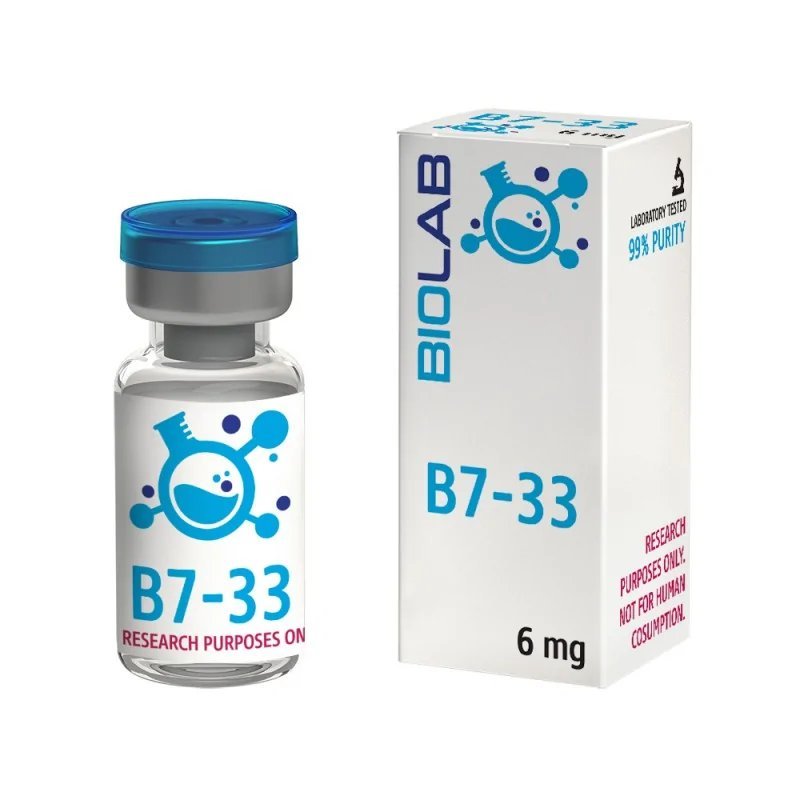
The 6 mg specification refers to the stated quantity of peptide material associated with a particular product presentation. Researchers should verify the quantity using the product label, specification sheet, and batch-specific documentation where available.
Accurate product identification is important for reproducible laboratory work. Relevant information can include the compound name, sequence or chemical description, stated quantity, batch number, purity information, and analytical testing. Website content should match the documentation provided for the specific batch rather than relying on generic descriptions.
Research Applications
B7-33 may be of interest to researchers studying peptide chemistry, receptor biology, molecular signalling, and experimental pharmacology. Scientific investigations can examine characteristics such as molecular structure, peptide stability, receptor interactions, and signalling mechanisms under controlled conditions.
Research should be conducted using appropriate laboratory protocols and validated analytical procedures. Results from cell-based or animal studies cannot automatically establish effects in humans. A responsible research-oriented website should therefore describe potential scientific relevance without claiming that the compound is an established treatment or approved therapeutic product.
Quality and Analytical Documentation
Quality documentation is an important consideration when evaluating research peptides. A certificate of analysis, when available, can provide batch-specific information relating to identity, reported purity, analytical testing, and specifications.
Researchers may also look for supporting information covering manufacturing, packaging, storage recommendations, and product specifications. Batch traceability helps laboratories maintain accurate records and compare materials used during different experiments.
Analytical techniques for peptide characterisation may include high-performance liquid chromatography and mass spectrometry. The appropriate testing method depends on the material and intended laboratory application. Independent testing may be useful where experimental protocols require additional confirmation of identity or purity.
Storage and Handling
Peptide materials can be sensitive to environmental conditions. Temperature, humidity, light, container integrity, and repeated exposure to unsuitable conditions may influence material stability. For this reason, researchers should follow the storage recommendations supplied with the specific product.
Storage requirements can vary between peptide materials and formulations. Laboratory personnel should consult product documentation and institutional procedures before handling, storing, or analysing experimental compounds. Generic storage assumptions should not replace batch-specific guidance.
UK Regulatory Considerations
The regulatory status of an experimental peptide in the United Kingdom can depend on its composition, intended purpose, presentation, claims, and method of distribution. The presence of scientific publications does not automatically mean that a compound is authorised as a medicine.
UK-facing content should therefore use careful terminology. Product pages should avoid unsupported statements that B7-33 treats a disease, produces guaranteed physiological benefits, or has established clinical efficacy. Research descriptions should clearly distinguish scientific investigation from approved medical use.
Businesses operating in the UK should independently verify applicable requirements with the relevant regulatory authorities before distributing peptide materials or making health-related claims. Regulatory requirements can change, making current verification important.
Selecting Research-Grade Material
Researchers assessing B7-33 6 mg can consider several quality indicators. These include clear labelling, batch traceability, stated specifications, analytical documentation, suitable packaging, and transparent sourcing information.
A well-structured product page should explain the material objectively and identify which information is supported by documentation. Avoiding exaggerated language can improve credibility and provide researchers with a clearer basis for evaluating a product.
SEO content can naturally incorporate related terms such as synthetic peptide, relaxin research, receptor signalling, laboratory analysis, peptide chemistry, analytical testing, research material, and UK research information. Using related terminology helps establish topical relevance without excessive repetition of a single keyword.
Frequently Asked Questions
What does 6 mg indicate?
It represents the stated quantity of peptide material in the specified presentation. Researchers should confirm the amount using the product label and available batch documentation.
Is B7-33 an approved medicine in the UK?
Experimental research and medicinal authorisation are separate matters. Current UK regulatory information should be checked before making claims about regulatory status.
Why is batch documentation important?
Batch documentation can help establish traceability and provide information about identity, reported purity, testing, and specifications for a particular material.
Do preclinical studies prove human effectiveness?
No. Laboratory and animal research does not by itself establish human safety, efficacy, or an approved therapeutic application.
Final Overview
B7-33 6 mg can be presented through informative, research-focused content covering its peptide background, relaxin-related research, stated quantity, analytical considerations, documentation, storage, and UK regulatory context. A strong SEO page should prioritise factual information and avoid unsupported medical promises.
For UK readers, transparent terminology and accurate specifications can make a product page more useful to researchers and scientifically interested audiences. Clear headings, relevant supporting keywords, concise explanations, and responsible communication can strengthen topical relevance while maintaining an appropriate distinction between experimental peptide research and licensed medical use.
This version is designed around UK SEO relevance, low keyword repetition, and responsible research-focused language.