Fragment 176-191 5 mg: UK Research Information
Fragment 176-191 is a synthetic peptide fragment that has been investigated in preclinical research involving growth-hormone-related biology, peptide chemistry, and metabolic pathways. A 5 mg presentation identifies the stated quantity of peptide material associated with a particular product specification. For UK audiences, responsible online content should distinguish experimental research materials from licensed medicines and avoid presenting preliminary findings as established clinical evidence.
This guide provides factual information about Fragment 176-191, its scientific background, the 5 mg specification, research considerations, quality documentation, storage, and UK regulatory awareness. It is intended for educational and research purposes and should not be interpreted as medical advice, treatment guidance, or instructions for human administration.
What Is Fragment 176-191?
Fragment 176-191 is a short synthetic peptide sequence derived from a region of human growth hormone. Researchers have investigated this peptide in experimental models to better understand its molecular characteristics and potential interactions with biological pathways.
Scientific research into a compound does not automatically demonstrate that it is safe, effective, or authorised for use in people. Laboratory and animal findings require careful evaluation of study design, experimental conditions, methodology, controls, and limitations.
A UK-facing product page should therefore focus on verifiable information and avoid turning preliminary research observations into claims about human health or guaranteed outcomes.
Understanding the 5 mg Specification
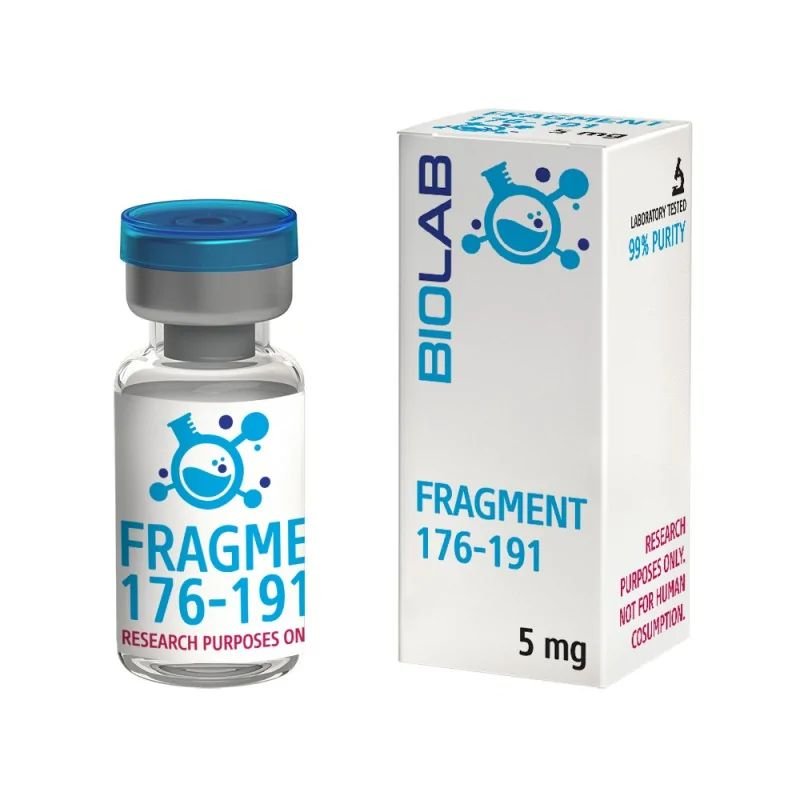
The 5 mg specification refers to the stated quantity of peptide material in the relevant presentation. Researchers should verify the declared amount using the product label, specification sheet, and available batch documentation.
Accurate identification and quantity information are important for laboratory traceability and reproducibility. Relevant details may include the compound name, peptide description, stated quantity, batch number, reported purity, analytical results, and manufacturing information.
Website content should correspond with documentation supplied for the specific batch rather than relying exclusively on generic product descriptions.
Research Applications
Fragment 176-191 may be relevant to research involving peptide chemistry, molecular biology, metabolic pathways, growth-hormone-related mechanisms, and analytical science. Experimental investigations can examine molecular structure, stability, degradation, interactions, and other biochemical characteristics under controlled conditions.
Researchers should distinguish experimental observations from established human evidence. Preclinical studies can contribute to scientific understanding, but they do not by themselves establish clinical safety, effectiveness, or therapeutic approval.
Quality and Analytical Documentation
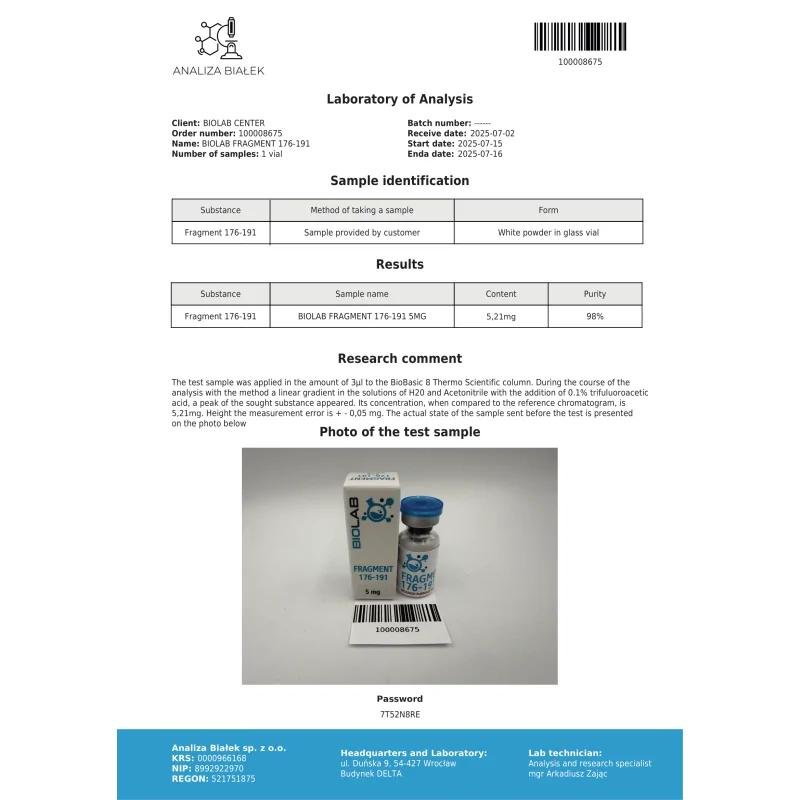
Quality documentation is an important consideration when evaluating research peptide materials. A certificate of analysis, when provided, may contain batch-specific information relating to identity, reported purity, analytical testing, and product specifications.
Researchers should check that the batch number displayed on the material matches the accompanying documentation. Additional information may include manufacturing details, packaging specifications, safety information, and storage recommendations.
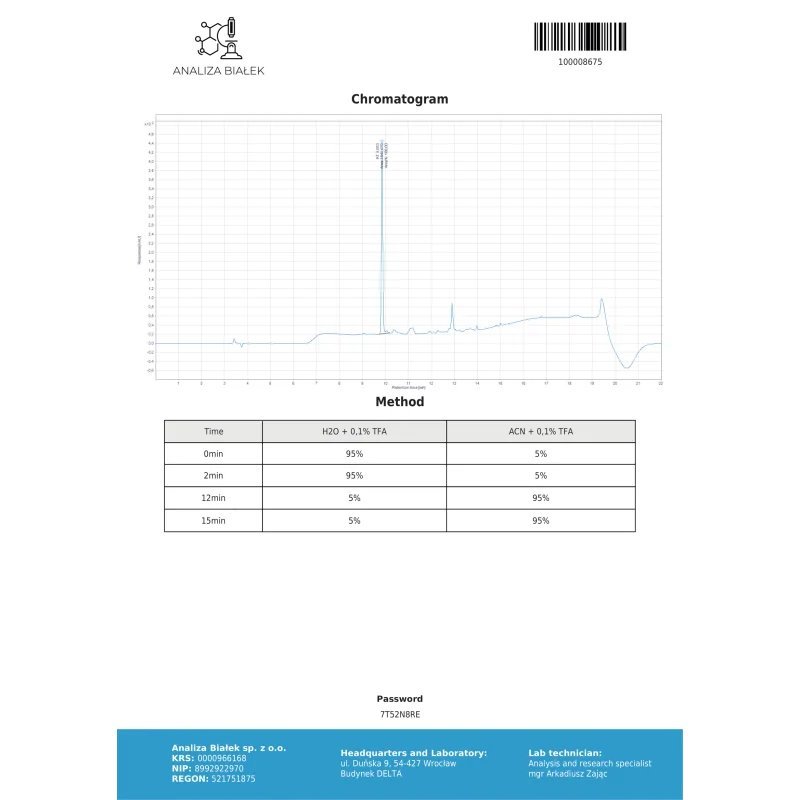
Peptide characterisation may involve analytical techniques such as high-performance liquid chromatography and mass spectrometry, depending on laboratory requirements. Independent testing may provide additional verification when a research programme requires confirmation of identity or purity.
Storage and Handling
Peptide materials can be sensitive to environmental conditions. Temperature, humidity, light exposure, air, and container integrity can affect material stability. Researchers should follow the storage instructions provided for the specific material and batch.
Storage requirements can differ between peptides, formulations, and packaging systems. Generic assumptions should not replace technical documentation. Laboratory personnel should follow appropriate institutional procedures when receiving, storing, handling, or analysing experimental materials.
UK Regulatory Considerations
The regulatory position of an experimental peptide product in the United Kingdom can depend on its composition, intended purpose, presentation, claims, and distribution. The existence of scientific publications does not automatically mean that a compound is authorised as a medicine.
UK-facing websites should use precise and responsible terminology. Pages should avoid unsupported claims that Fragment 176-191 causes guaranteed fat loss, treats medical conditions, improves health, or provides established therapeutic benefits.
Businesses involved in supplying or developing research materials should independently verify current UK requirements with the appropriate regulatory authorities before distribution or publication of health-related claims.
Selecting Research Materials
When evaluating Fragment 176-191 5 mg, researchers can consider clear labelling, batch traceability, analytical documentation, appropriate packaging, storage guidance, and transparent specifications.
A professional research page should distinguish verified product information from broader scientific discussion. Clear documentation supports laboratory record keeping and helps researchers assess whether a material is suitable for a defined experimental purpose.
For SEO, related terms can be incorporated naturally, including synthetic peptide, peptide research, metabolic research, laboratory analysis, peptide chemistry, analytical testing, research material, batch documentation, and UK research information. Semantic relevance is preferable to excessive repetition of one keyword.
Frequently Asked Questions
What does 5 mg indicate?
It identifies the stated quantity of peptide material in the specified presentation. Researchers should verify the amount using the product label and available batch documentation.
Is Fragment 176-191 an approved UK medicine?
Research status and medicinal authorisation are separate matters. Current UK regulatory information should be checked before making claims about medicinal approval.
Do preclinical studies prove human effectiveness?
No. Laboratory and animal studies do not by themselves establish human safety, clinical effectiveness, or an approved therapeutic application.
Why is batch documentation important?
It can support traceability and provide information about identity, reported purity, testing, and specifications for a particular material.
Final Overview
Fragment 176-191 5 mg can be presented through clear, research-focused information covering its synthetic peptide background, stated quantity, analytical considerations, quality documentation, storage, and UK regulatory context.
For UK audiences, accurate specifications, natural semantic keywords, transparent documentation, and responsible scientific language can strengthen topical relevance without overstating available evidence. Keeping experimental research clearly separate from licensed medical use also helps create a credible and informative resource for researchers and scientifically interested readers.