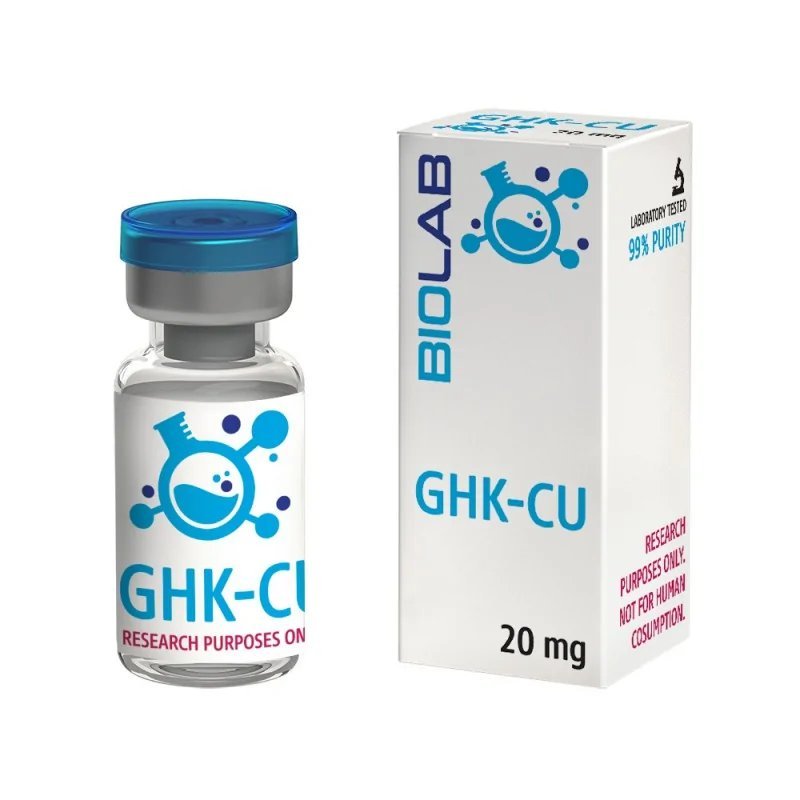
GHK-Cu Copper Peptide 50 mg for Research and Cosmetic Formulation
GHK-Cu is a copper-binding peptide widely discussed in biochemical research and cosmetic formulation. Also known as copper tripeptide-1, it consists of the naturally occurring tripeptide GHK associated with copper ions. Interest in this compound has grown because of research into peptide chemistry, copper interactions, skin biology, and advanced cosmetic formulations.
This 50 mg presentation provides a defined quantity of material for appropriate research and formulation applications. For customers in the UK, choosing clearly labelled peptide products with transparent specifications can make it easier to evaluate quality, intended use, handling requirements, and suitability for a particular project.
What Is GHK-Cu?
GHK-Cu refers to a copper complex involving glycyl-L-histidyl-L-lysine, a short sequence of three amino acids. Copper tripeptide-1 has become an established ingredient of interest within cosmetic science and has also been investigated in laboratory settings.
The compound is particularly interesting because peptides can interact with metal ions in ways that influence their chemical characteristics. Researchers continue to examine these interactions and their relevance to formulation science.
It is important to distinguish scientific investigation from established clinical outcomes. Laboratory findings do not automatically demonstrate that a peptide product provides a particular benefit when used by people. A responsible product description should therefore concentrate on verifiable characteristics rather than guaranteed results.
50 mg Product Specification
The stated presentation contains 50 mg of the peptide material. The quantity refers to the amount supplied and should not be interpreted as a recommended human dose.
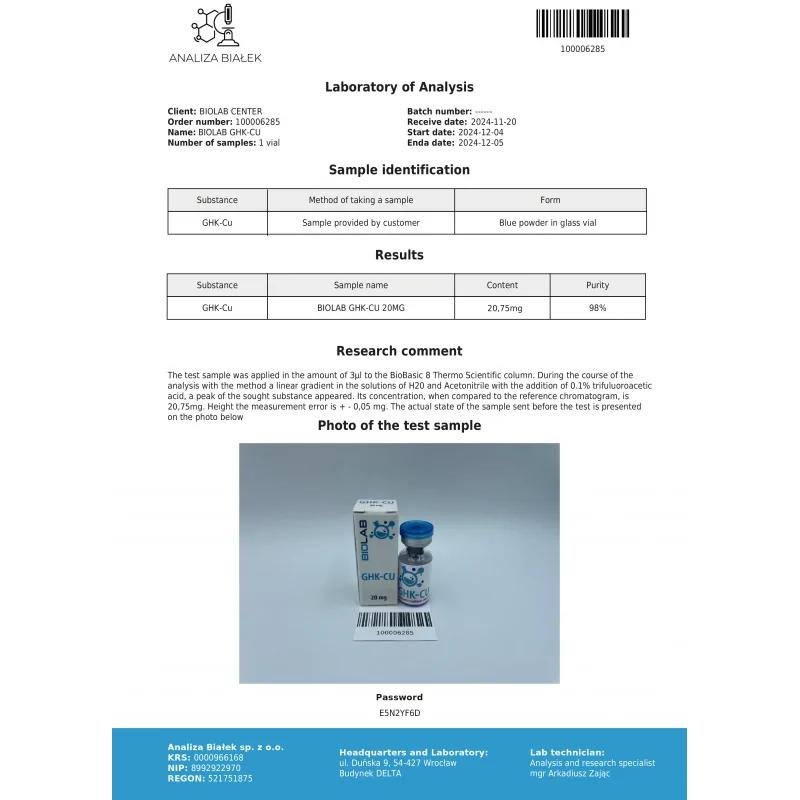
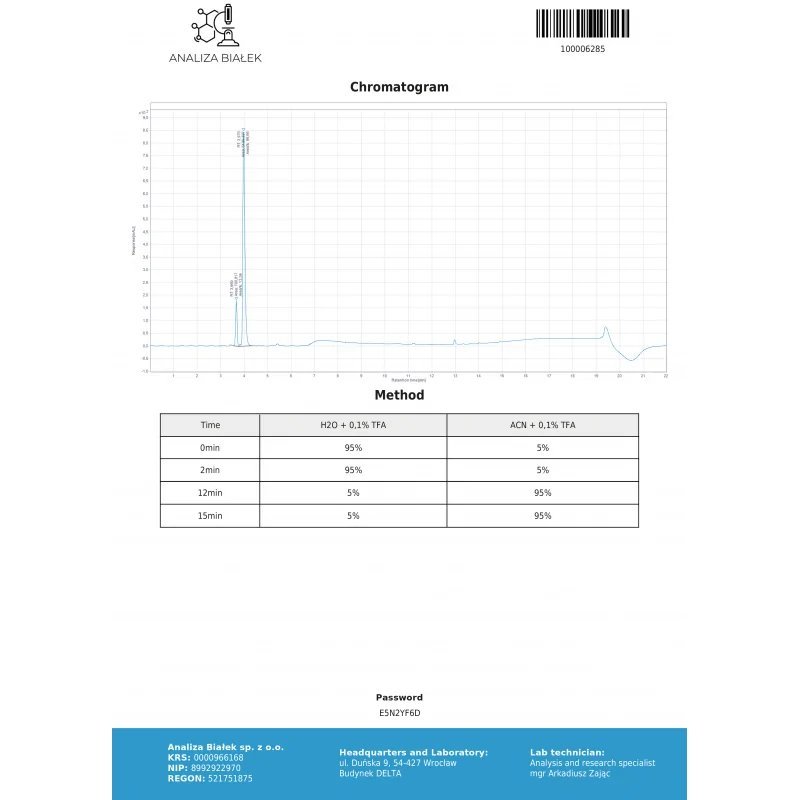
A professional product listing should provide relevant information such as the compound name, quantity, physical presentation, purity information where available, batch identification, storage instructions, and certificate of analysis documentation.
These details can help researchers and cosmetic formulators compare materials from different suppliers. Product-specific documentation should always take priority over general information published on third-party websites.
Applications in Cosmetic Research
Copper peptides have received considerable attention within cosmetic formulation research. They may be investigated as ingredients in topical formulations and experimental skincare projects.
Formulation development involves more than simply adding an ingredient to a product. Researchers may need to consider concentration, pH, solubility, stability, compatibility with other ingredients, packaging, and storage conditions.
Copper-containing compounds can interact with other components in a formulation, so controlled testing is important during development. The appropriate concentration and formulation method depend on the specific project and technical requirements.
The 50 mg quantity can provide a defined starting material for small-scale laboratory or formulation work, subject to the specifications and intended use supplied by the manufacturer.
Research Considerations
Research involving peptides requires attention to material identity and consistency. Researchers may assess characteristics such as purity, molecular identity, physical appearance, solubility, and stability depending on the purpose of their work.
A certificate of analysis can provide useful information about a particular batch. Where available, analytical documentation may help researchers establish whether the supplied material meets their project requirements.
Storage can also influence peptide quality. Exposure to unsuitable temperatures, moisture, light, or repeated environmental changes may affect sensitive materials. Users should therefore follow the supplier’s specific storage recommendations.
Choosing a UK Supplier
When searching for peptide materials in the UK, transparency is an important consideration. A reliable supplier should provide clear product specifications rather than relying exclusively on promotional statements.
Before placing an order, researchers and formulators may wish to review the product description, stated quantity, available analytical documentation, packaging information, intended-use statement, and storage guidance.
UK customers should also consider any applicable rules governing the purchase, possession, importation, formulation, or use of research chemicals and cosmetic ingredients. Regulatory requirements can depend on the product, intended application, claims made, and how the material is supplied.
Avoiding exaggerated health claims is particularly important. Search-friendly content can still be informative without suggesting that a peptide cures disease, reverses ageing, replaces medical treatment, or guarantees a particular physical outcome.
Storage and Handling
Storage conditions should follow the manufacturer’s technical instructions. Depending on the formulation and packaging, peptides may require protection from environmental factors such as heat, moisture, and excessive light.
Keep the original container and product documentation available whenever possible. Batch information can be useful for traceability and quality-control records, particularly when materials are used as part of an ongoing research or formulation programme.
Appropriate laboratory handling procedures should also be followed. Research-grade materials should not automatically be assumed to be suitable for ingestion, injection, or other forms of human use.
Frequently Asked Questions
What does the 50 mg quantity represent?
It represents the stated amount of peptide material supplied in the product presentation. It is not a recommended dosage.
What is copper tripeptide-1?
Copper tripeptide-1 is the commonly used name associated with the copper complex of the GHK tripeptide.
Is this a dietary supplement?
A peptide material should not automatically be classified as a dietary supplement. Classification depends on the product, formulation, intended use, claims, and applicable regulations.
Why is product documentation important?
Documentation can help establish material identity, batch information, purity specifications, storage requirements, and suitability for a particular research or formulation project.
Final Overview
GHK-Cu copper peptide 50 mg is a defined peptide material with applications and research interest in cosmetic formulation and biochemical investigation. Its chemistry, copper association, and potential formulation characteristics make it an interesting subject for continued scientific study.
For UK researchers and formulators, accurate product information is more valuable than unsupported marketing claims. Checking specifications, analytical documentation, storage requirements, intended use, and relevant UK regulations can help support responsible purchasing decisions.
Whether being evaluated for formulation development or laboratory research, the material should be handled according to the manufacturer’s instructions and used only for its stated purpose. Clear documentation and responsible product descriptions provide a stronger foundation for informed research and professional formulation work.