PDA Pentadeca Arginate 5 mg – UK Research Information
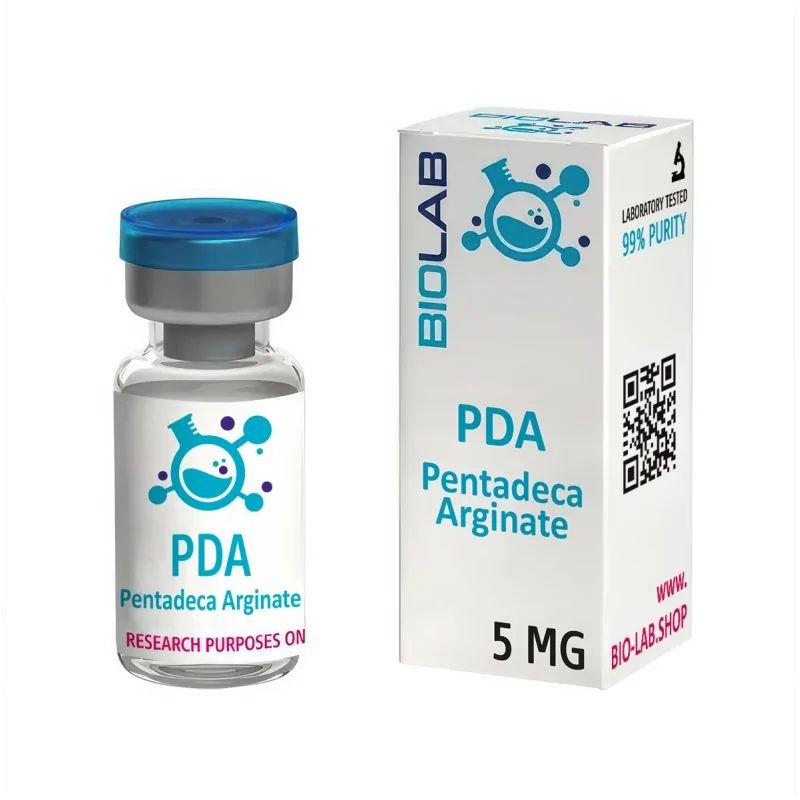
PDA Pentadeca Arginate is an emerging peptide preparation that has attracted attention within the research-peptide market. It is generally described as an arginate-salt form of BPC-157, a synthetic pentadecapeptide consisting of 15 amino acids. The term “pentadeca” refers to the fifteen-amino-acid structure, while “arginate” identifies the salt form associated with the peptide.
For UK audiences searching for Buy PDA Pentadeca Arginate 5 mg, it is important to distinguish research material from an authorised medicinal product. Current information indicates that direct peer-reviewed research specifically investigating Pentadeca Arginate is extremely limited, with many claims surrounding the product being extrapolated from research involving BPC-157 rather than the arginate form itself. (The Complete Peptide Dosages Reference)
What Is Pentadeca Arginate?
Pentadeca Arginate, commonly abbreviated as PDA, is marketed as an arginate version of the BPC-157 peptide sequence. Sources describing its chemistry identify the underlying sequence as the same fifteen-amino-acid chain associated with BPC-157, while the counter-ion differs from conventional acetate formulations. (PeptiMap)
This distinction is important when evaluating scientific claims. Changing a salt or counter-ion can influence characteristics such as formulation, solubility and stability, but it does not automatically establish a different biological effect or demonstrate improved performance.
Researchers should therefore consider PDA as a formulation requiring its own evidence rather than assuming that every finding involving BPC-157 applies directly to the arginate preparation.
PDA 5 mg Research Material
A 5 mg specification describes the stated quantity of peptide material in a particular research preparation. It should not be interpreted as an established human dosage, treatment recommendation or clinically validated strength.
For laboratories evaluating peptide materials, product documentation can be particularly useful. Researchers may examine information concerning peptide identity, batch number, stated purity, analytical testing, storage conditions and manufacturing standards.
Where available, analytical documentation such as HPLC and mass-spectrometry results can provide additional information about the identity and purity of a specific batch. Independent testing may also be considered where appropriate for the intended laboratory application.
What Does the Research Show?
One of the most important considerations is the difference between research involving BPC-157 and research specifically involving Pentadeca Arginate. Available sources report that PDA itself has little or no independent peer-reviewed research, meaning that claims about its biological activity frequently rely on information associated with the parent peptide. (Open Assay)
Preclinical BPC-157 research has investigated areas including cellular signalling, tissue-related processes and gastrointestinal models. However, these findings do not establish that an arginate formulation produces the same effects in humans.
Consequently, responsible scientific content should clearly identify which findings relate directly to PDA and which are derived from studies of BPC-157.
Why Researchers Are Interested
Interest in this peptide preparation is partly related to the proposed differences between salt formulations. Some commercial descriptions suggest that an arginate form may offer formulation or stability advantages. However, available reviews indicate that these claims have not been supported by a substantial body of independent peer-reviewed research. (The Complete Peptide Dosages Reference)
This makes PDA an interesting subject for analytical and formulation research. Scientists can investigate its chemical characteristics, stability, purity and behaviour under controlled laboratory conditions rather than relying on promotional descriptions.
Quality and Documentation
When evaluating research peptides, quality information is more useful than broad marketing statements. Researchers can look for transparent product specifications, batch identification and analytical documentation.
A certificate of analysis, where supplied by a reputable laboratory or manufacturer, may contain information about identity and purity. Researchers should review such documentation carefully and consider whether independent confirmation is appropriate.
Storage and handling information should also be followed according to laboratory procedures. Peptide materials can be sensitive to environmental conditions, so appropriate storage may be important for maintaining material integrity.
UK Regulatory Considerations
UK-facing websites should take particular care when describing research peptides. A research listing should not be presented as an authorised medicine, and websites should avoid unsupported statements suggesting that a compound can diagnose, prevent or treat a medical condition.
The Medicines and Healthcare products Regulatory Agency (MHRA) provides guidance concerning medicines, including the distinction between authorised and unlicensed medicinal products. The regulatory classification of a product can depend partly on its presentation and the claims made about it.
For this reason, UK SEO content is best written using accurate research terminology rather than therapeutic promises. This approach can also create more trustworthy content for readers looking for scientifically relevant information.
Frequently Asked Questions
What is PDA Pentadeca Arginate?
It is marketed as an arginate-salt form of the 15-amino-acid peptide sequence associated with BPC-157. The principal distinction described in current sources is the salt or counter-ion rather than a completely different peptide sequence. (PeptiMap)
What does 5 mg mean?
Five milligrams refers to the stated quantity of peptide material. It does not represent an approved human dosage or establish a recommended administration schedule.
Is PDA the same as BPC-157?
It is commonly described as the arginate-salt form of the BPC-157 sequence. However, researchers should not automatically assume that findings involving one formulation demonstrate identical pharmacology, safety or effectiveness for another. (ArginateCare)
Is Pentadeca Arginate clinically proven?
No robust clinical evidence currently establishes PDA as an effective human treatment. Direct research on the arginate form is very limited, and many claims are based on research involving BPC-157. (ArginateCare)
Conclusion
PDA Pentadeca Arginate represents an emerging area of peptide research. Its relationship with BPC-157 makes it particularly interesting from a formulation and analytical perspective, but the limited direct evidence means that claims should be evaluated carefully.
For UK readers searching Buy PDA Pentadeca Arginate 5 mg, responsible product information should clearly distinguish research material from authorised medicines and separate documented scientific findings from marketing claims. Providing transparent specifications, accurate terminology and appropriate regulatory information can help create a more credible and useful UK-focused resource.