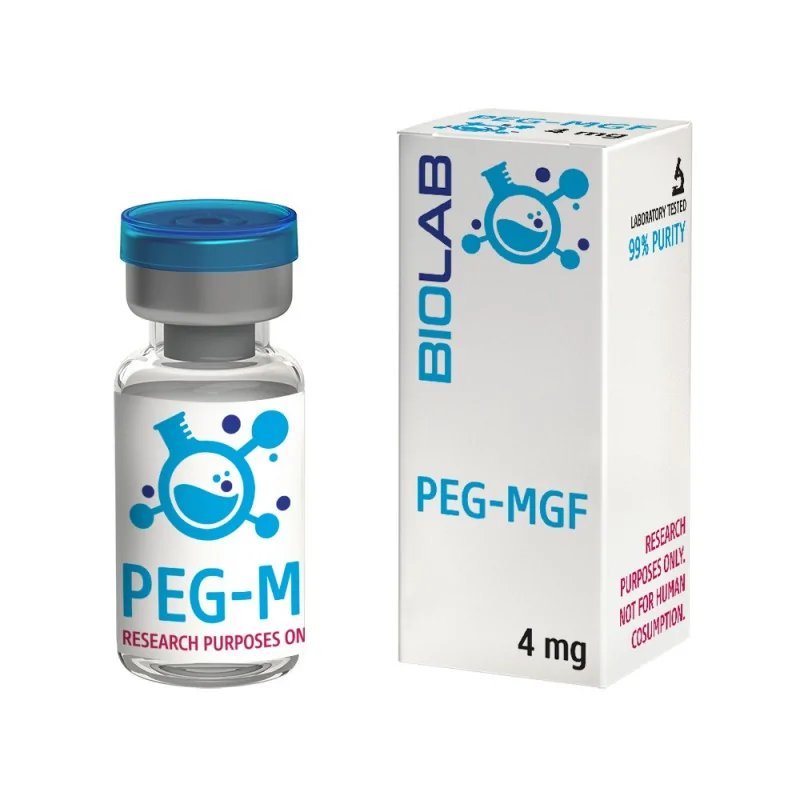


PEG-mgF 4 mg: UK Research Information and Product Overview
PEG-mgF is a modified growth-factor-related peptide that may be of interest in laboratory research involving peptide structure, molecular signalling and protein behaviour. Researchers investigating modified peptide compounds may examine characteristics such as molecular stability, receptor interactions and biological activity under controlled experimental conditions. The 4 mg specification refers to the stated quantity of material and should not be interpreted as a recommended human dose, treatment schedule or established medical indication.
For UK-facing websites, accurate and transparent information is particularly important. The Medicines and Healthcare products Regulatory Agency (MHRA) considers explicit and implied claims, pharmacological properties, intended purpose and how a product is presented through labelling, advertising, websites and other promotional material when assessing medicinal status.
What Is PEG-mgF?
PEG-mgF refers to a modified peptide associated with research into growth-factor biology and molecular signalling. The term PEG generally relates to polyethylene glycol modification, a technique used in biotechnology to alter certain characteristics of biological molecules.
The exact properties of a modified peptide depend on its molecular structure, formulation and manufacturing process. Researchers should therefore consult the technical documentation associated with the specific material rather than assuming that similarly named products have identical characteristics.
Laboratory research should also be interpreted carefully. Findings observed in experimental models do not automatically establish clinical effectiveness, safety, therapeutic suitability or an approved medical use.
Understanding the 4 mg Specification
A 4 mg designation describes the stated quantity of material supplied in the specified product. It does not establish a clinical dosage or recommended administration schedule.
Researchers should review the complete product specification before incorporating a material into laboratory work. Relevant information may include identity, peptide sequence or structural description, stated purity, batch number, formulation, storage requirements and analytical testing.
Where different formulations or batches are available, their characteristics may vary. Batch-specific documentation is therefore preferable to assumptions based solely on a product name or labelled quantity.
Potential Research Context
Modified peptide compounds can be investigated in laboratory settings to explore molecular interactions, protein behaviour and cellular signalling. Research involving growth-factor-related molecules may contribute to a broader understanding of how structural modifications influence biological characteristics.
Experimental investigations should be designed around appropriate laboratory protocols, controls and institutional requirements. Researchers should also follow applicable handling, storage and safety procedures for the materials involved.
It is important to distinguish scientific investigation from medical claims. The existence of experimental research does not mean that a compound has been clinically validated or authorised to diagnose, prevent or treat a condition.
Product Quality and Documentation
Reliable documentation is an important consideration when assessing specialist research materials. Depending on the supplier, useful records may include a certificate of analysis, analytical testing results, batch identification, purity information, formulation details and storage guidance.
Clear documentation helps laboratories maintain traceability and compare individual batches. It can also provide useful information when researchers are evaluating whether a material is appropriate for a particular experimental protocol.
A professionally written product page should therefore prioritise factual specifications and clearly communicate the intended research context without making unsupported health promises.
UK Regulatory Considerations
UK businesses should consider the applicable regulatory framework before publishing content about peptide products. The MHRA states that it assesses claims about what a product does, its pharmacological, metabolic or immunological properties, its intended purpose and the way it is presented to the public. Websites and social-media content can form part of this assessment.
The MHRA also states that medicines that are not licensed cannot be advertised in the UK. Promotional information about medicines on company websites is specifically included within its advertising guidance.
Businesses that are uncertain about a product’s classification can seek advice through the MHRA Medicines Borderline Advice process. The agency requests information about the product, how it works and the wording or graphics used for promotion when assessing an enquiry.
Responsible UK Product Content
A responsible UK research page should provide clear, verifiable information rather than exaggerated claims. Product identity, stated quantity, research status, available analytical documentation and storage information can all improve transparency.
It is also important to avoid implying that a research compound provides guaranteed physiological or therapeutic results. The MHRA notes that both explicit and implicit claims can influence medicinal classification, while disclaimers do not necessarily resolve medical claims made elsewhere on websites or promotional materials.
From an SEO perspective, useful headings, natural language, informative FAQs and related terminology provide stronger topical context than repeatedly inserting an exact-match phrase. Relevant concepts include peptide research, molecular biology, laboratory analysis, growth-factor signalling and research materials.
Frequently Asked Questions
What is PEG-mgF?
PEG-mgF is a modified peptide associated with research into growth-factor biology, molecular structure and signalling pathways.
What does 4 mg mean?
Four milligrams refers to the stated quantity of material in the specified product. It is not a recommended human dosage.
Is this an approved UK medicine?
A research peptide should not automatically be regarded as a licensed medicine. Regulatory status depends on factors including composition, intended purpose, claims and presentation.
What should researchers check?
Researchers should review identity, purity information, batch documentation, formulation, storage requirements and available analytical testing before using specialist research material.
Conclusion
PEG-mgF 4 mg can be presented in a UK research context as a modified peptide format relevant to investigations into molecular structure, protein characteristics and growth-factor-related signalling. Clear technical documentation and responsible terminology are important when publishing information about specialist research materials.
For UK websites, regulatory awareness should remain a priority. The MHRA evaluates the overall presentation of products, including claims made through websites and advertising. Keeping content factual, transparent and focused on documented research characteristics can provide visitors with useful information while reducing the risk of unsupported medicinal claims.