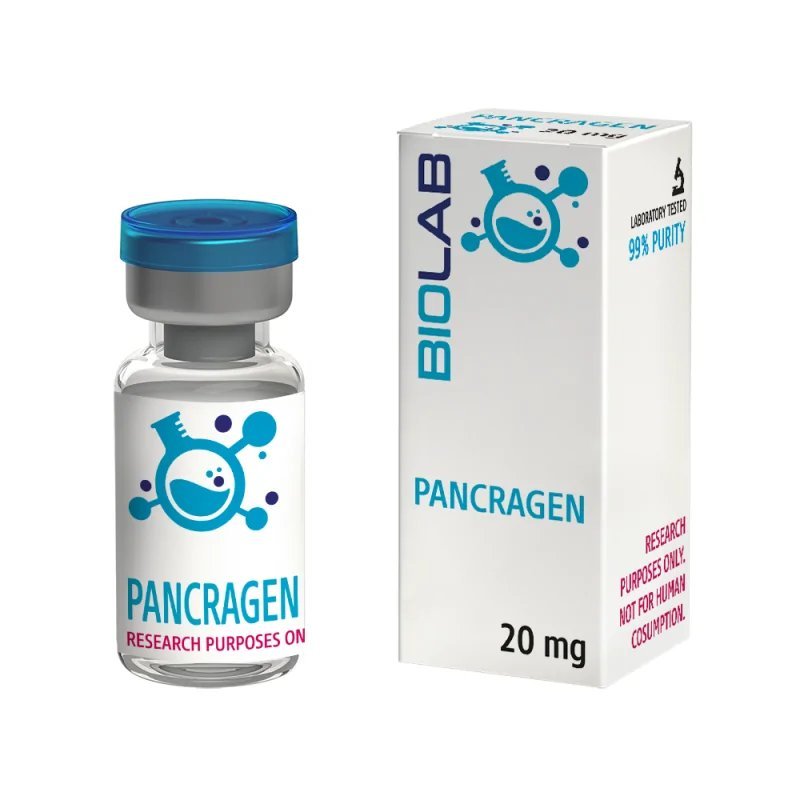
Buy Pancragen 20 mg – UK Research Peptide Material
Pancragen is a name associated with the synthetic tetrapeptide KEDW, also identified by the amino-acid sequence Lys-Glu-Asp-Trp. It belongs to the group of tissue-associated peptide bioregulators investigated in experimental research. A 20 mg presentation may be relevant to laboratories studying peptide chemistry, pancreatic biology, molecular signalling, and analytical methods. This UK-focused page presents the material strictly within a research context and does not describe it as an authorised medicine or treatment.
What Is Pancragen?
Pancragen is commonly described in research literature and specialist databases as a short synthetic peptide associated with pancreatic tissue research. Its four-amino-acid sequence provides a relatively simple molecular structure for analytical and biochemical investigation.
Research associated with KEDW has explored pancreatic cellular processes and age-related biological models. However, the available evidence should be interpreted cautiously because experimental findings from particular cell or animal models do not establish clinical effectiveness or safety in humans.
For laboratory work, researchers should confirm the exact identity of the material using current supplier documentation. The commercial name alone should not be treated as sufficient evidence of composition, purity, provenance, or biological activity.
Research Applications
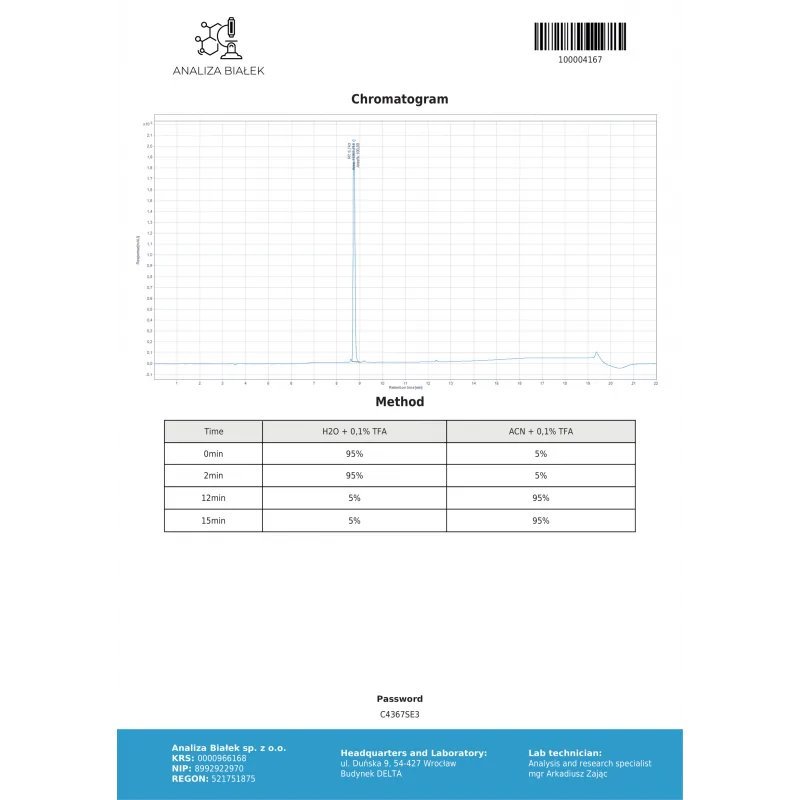
Laboratory investigation may examine Pancragen in peptide chemistry, molecular biology, pancreatic research, and analytical science. Potential projects can include identity confirmation, purity testing, stability studies, degradation analysis, chromatographic characterisation, and comparison with authenticated reference materials.
Researchers interested in biological mechanisms may also investigate experimental interactions involving pancreatic cells or molecular pathways. Such projects should use appropriate controls and validated experimental methods.
Available specialist research summaries describe KEDW as a pancreas-associated peptide and report experimental investigations involving pancreatic function and glucose-related models. These observations remain part of the research literature and should not be converted into claims that the material treats diabetes, improves blood glucose control, or restores pancreatic health in people. (Axiom Pharma)
20 mg Product Format
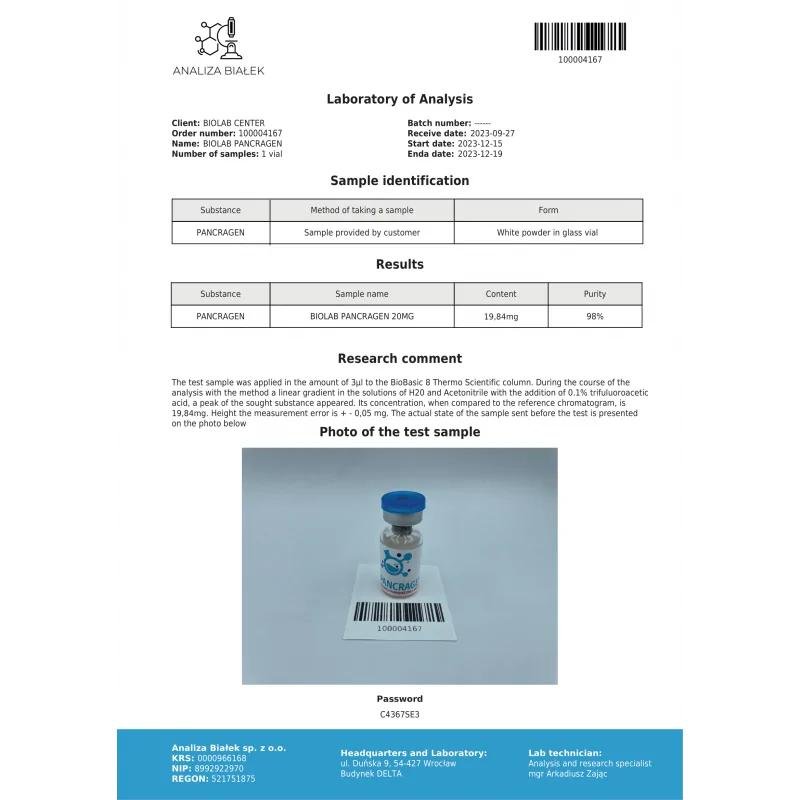
The 20 mg format provides a defined quantity for laboratory and analytical research. Before purchasing, researchers should review the complete product specification, including peptide identity, composition, purity information, batch or lot number, certificate of analysis, and storage recommendations.
The stated quantity represents the supplied product amount and is not a human dosage recommendation. This page does not provide instructions for injection, administration, reconstitution, or personal use. Experimental preparation should be determined by suitably qualified researchers using an appropriate laboratory protocol.
Why Study Pancreatic Peptides?
Short peptides can provide useful experimental tools for investigating molecular interactions, cellular signalling, gene-expression pathways, and tissue-specific biology. Because Pancragen contains only four amino acids, researchers can examine its chemical characteristics using established peptide-analysis techniques.
Experimental studies may compare KEDW with other short peptides to investigate structural properties, analytical behaviour, stability, and biological responses under defined laboratory conditions.
Researchers should distinguish between mechanistic observations and clinical evidence. A laboratory result does not automatically demonstrate that a compound is effective, safe, or appropriate for use outside the experimental setting.
Quality Considerations for UK Researchers
Quality and traceability are important when sourcing experimental peptide materials. Laboratories should look for clear product identification, stated composition, batch information, certificates of analysis, purity data, and appropriate technical documentation.
Where research requires high analytical confidence, independent testing may be considered. Analytical verification can help confirm identity and detect potential impurities or inconsistencies between labelled and measured composition.
UK websites should also use accurate product terminology. MHRA guidance explains that medicinal products without the required UK authorisation cannot be advertised, while factual informative material can be provided when it does not make medicinal product claims. (GOV.UK)
Laboratory Handling and Storage
Researchers should follow the supplier’s technical documentation and their institution’s standard operating procedures for handling and storage. Appropriate laboratory risk assessments should be completed before experimental work begins.
Maintain records for product identity, batch details, storage conditions, preparation, analytical methods, and experimental observations. Appropriate labelling and contamination-control procedures should be used throughout the research process.
Storage requirements should be based on the manufacturer’s documentation for the specific formulation rather than assumptions based on other peptides. Disposal should follow applicable institutional and laboratory-waste procedures.
Choosing a Research Supplier
A suitable research supplier should provide transparent information that supports laboratory traceability. Useful documentation may include product specifications, batch identifiers, certificates of analysis, purity information, and technical support.
For UK SEO, related search terms can be incorporated naturally, including Pancragen research peptide, KEDW peptide, pancreatic peptide research, experimental peptide material, laboratory peptide studies, peptide analytical research, and research-grade peptide.
Using semantically relevant terminology provides broader topical coverage without excessive repetition of the primary phrase.
Order Pancragen 20 mg for Laboratory Research
Laboratories investigating peptide chemistry, pancreatic biology, molecular pathways, or analytical characterisation may require clearly identified research materials. Review the available specification and supporting documentation before purchasing, and confirm that the material matches the requirements of the intended scientific project.
This page is written for research audiences and does not recommend the product for diabetes management, pancreatic disorders, ageing, metabolic health, bodybuilding, or personal administration.
Important UK Research Disclaimer
This material is presented exclusively for laboratory, scientific, analytical, and research purposes. It is not presented as an authorised medicine and is not intended for human or veterinary consumption, self-administration, diagnosis, treatment, cure, or prevention of disease. No dosing or administration instructions are provided.
Researchers and suppliers are responsible for complying with applicable UK requirements, institutional policies, laboratory safety procedures, product-classification rules, and appropriate waste-management requirements. Scientific findings should be evaluated critically and interpreted according to the specific experimental model, methodology, and available evidence.