Cartalax 20 mg: UK Research Information
Cartalax is a synthetic short-chain peptide that has attracted interest within preclinical research into cartilage, connective tissue and cellular biology. It is commonly identified as Ala-Glu-Asp (AED) or T-31 and is associated with the Khavinson peptide bioregulator research programme. Researchers have investigated this compound in laboratory and experimental models to better understand its potential biological activity.
For people searching online for Buy Cartalax 20 mg, it is important to distinguish research material from an authorised medicine. Cartalax should not be presented as an established treatment for joint conditions, cartilage damage, pain or other medical disorders. Available evidence remains limited, and reliable sources report that there is no established human dosage or sufficiently robust clinical evidence demonstrating therapeutic effectiveness. (Peptigraph)
What Is Cartalax?
Cartalax is generally described as a synthetic tripeptide consisting of alanine, glutamic acid and aspartic acid. Its short molecular structure has made it a subject of interest in experimental peptide research.
Laboratory investigations have explored whether AED may influence cellular processes associated with connective tissue and cartilage-related biology. These findings are useful for generating research hypotheses, but laboratory observations cannot automatically be translated into proven benefits in people.
Researchers should therefore consider the current evidence carefully and distinguish experimental findings from established clinical outcomes.
Research Interest in Cartilage Biology
One reason Cartalax has received attention is its association with research into cartilage and connective tissue. Experimental studies have examined cellular responses and biological pathways that may be relevant to tissue maintenance.
However, evidence summaries indicate that the available literature does not establish Cartalax as a clinically proven method for repairing cartilage or treating osteoarthritis. Some research has been conducted using cell cultures or experimental models rather than controlled clinical trials involving patients. (Peptigraph)
This distinction is important for responsible scientific communication. A biological effect observed under laboratory conditions does not necessarily mean that the same effect occurs in the human body.
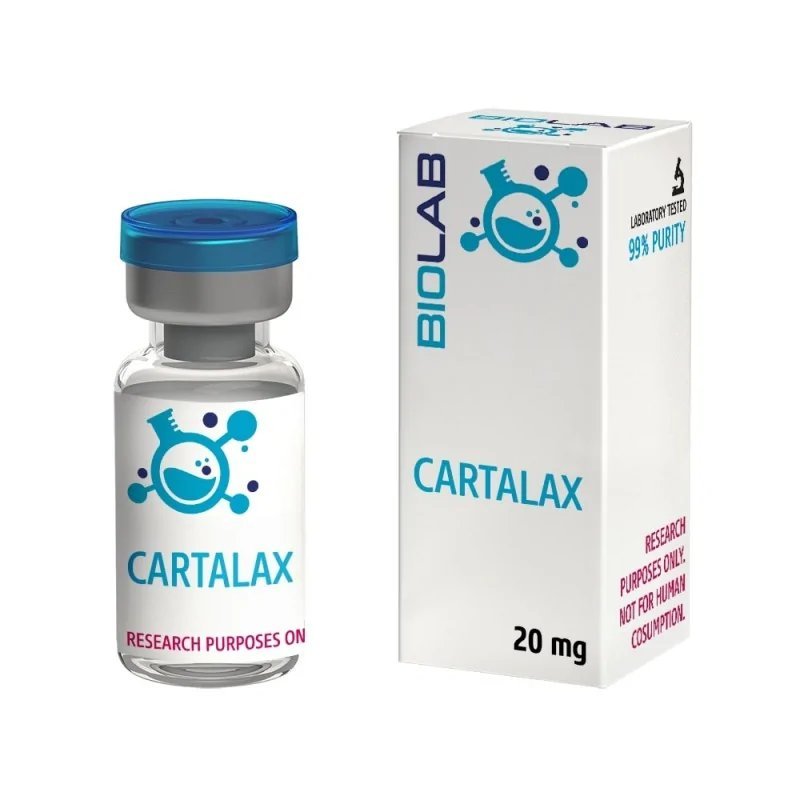
Cartalax 20 mg Research Material
A 20 mg specification generally describes the quantity of material supplied in a particular research preparation. It should not automatically be interpreted as an approved human treatment strength or recommended clinical dose.
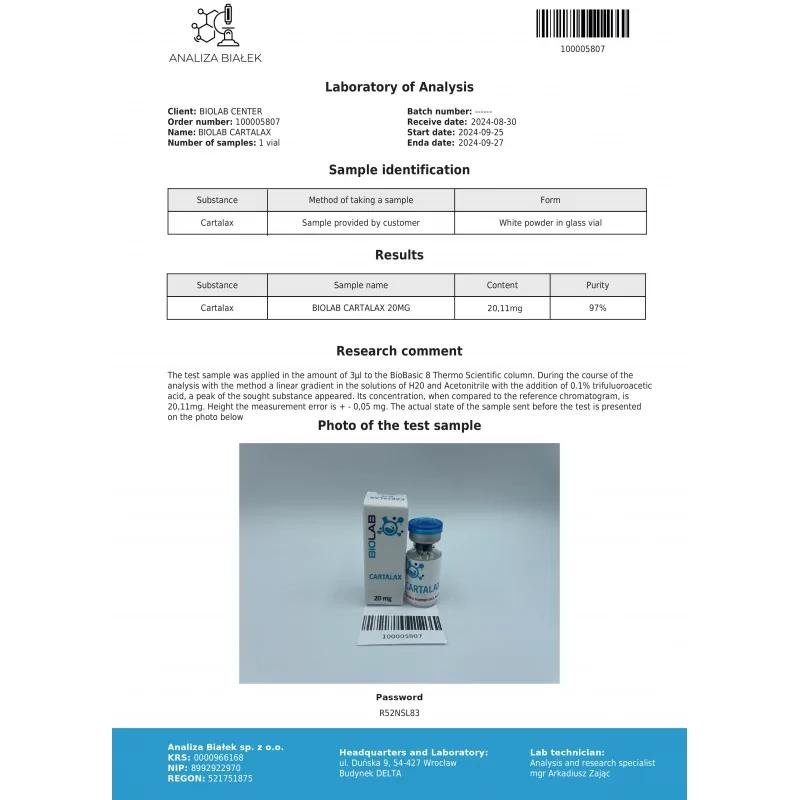
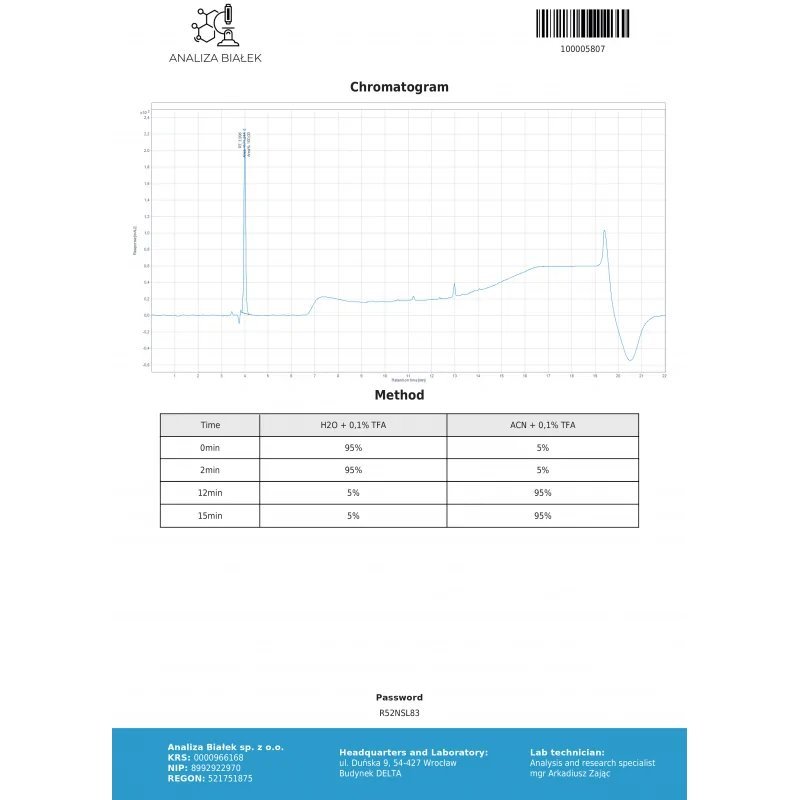
For organisations and laboratories investigating peptide biology, product documentation can be an important part of evaluating research material. Information such as batch identification, analytical testing, storage requirements and certificates of analysis can help researchers assess the material they receive.
Online product descriptions should not be treated as substitutes for independent laboratory verification. Purity percentages, manufacturing claims and other specifications should be supported by appropriate documentation where available.
Evidence and Current Research
The scientific evidence surrounding Cartalax remains comparatively limited. Evidence reviews describe laboratory and experimental work involving cellular systems and animal-related research, while reliable sources do not establish a validated human dosing protocol. (Peptigraph)
This means that claims relating to pain relief, cartilage regeneration, improved mobility or treatment of joint disease should not be presented as established medical facts.
Researchers interested in this peptide should examine primary literature wherever possible and consider the methodology, model used, sample size and limitations of each study. This approach provides a more accurate understanding of what the available evidence actually demonstrates.
UK Regulatory Considerations
UK medicinal products are subject to regulatory requirements overseen by the Medicines and Healthcare products Regulatory Agency (MHRA). The MHRA provides guidance concerning medicinal products, marketing authorisations and clinical research. (GOV.UK)
Because Cartalax is not established as an authorised UK medicine, websites should avoid describing it as a licensed treatment or making unsupported therapeutic promises. Businesses operating in the UK should also ensure that product descriptions and advertising comply with applicable medicines and consumer-protection requirements.
The MHRA provides a specific process for determining whether a product may fall within the definition of a medicine, making regulatory assessment particularly relevant when a product is promoted with health-related claims. (GOV.UK)
Responsible Peptide Research
Responsible research requires accurate descriptions, transparent documentation and clear separation between experimental findings and clinical evidence. A research compound should not be marketed using testimonials or statements that imply guaranteed medical outcomes.
When evaluating peptide material, researchers may consider the identity of the compound, stated quantity, analytical documentation, storage information and supplier transparency. Independent testing may also be appropriate depending on the intended laboratory application.
Frequently Asked Questions
What is Cartalax?
Cartalax is a synthetic tripeptide commonly identified as Ala-Glu-Asp (AED) or T-31. It has been investigated in preclinical research involving cellular and tissue-related biology.
Is 20 mg an approved treatment dose?
No. A 20 mg product specification should not be interpreted as an officially established human dosage. Available evidence does not provide a validated clinical dosing recommendation. (Peptigraph)
Is Cartalax proven to repair cartilage?
Current evidence does not establish Cartalax as a clinically proven cartilage-repair treatment. Research remains limited and predominantly preclinical.
Why is Cartalax studied?
Researchers have investigated the peptide because of potential interactions with cellular processes associated with cartilage and connective-tissue biology. Further research is required to determine whether laboratory findings have meaningful clinical relevance.
Conclusion
Cartalax remains an experimental peptide of interest within preclinical research. Its association with cartilage and connective-tissue biology has encouraged further investigation, but the available evidence should not be confused with established clinical efficacy.
For UK audiences searching for Buy Cartalax 20 mg, accurate product information should clearly identify the material as research-focused and avoid unsupported medical claims. Transparent documentation, responsible scientific language and awareness of UK regulatory requirements are essential when publishing information about investigational peptide compounds.