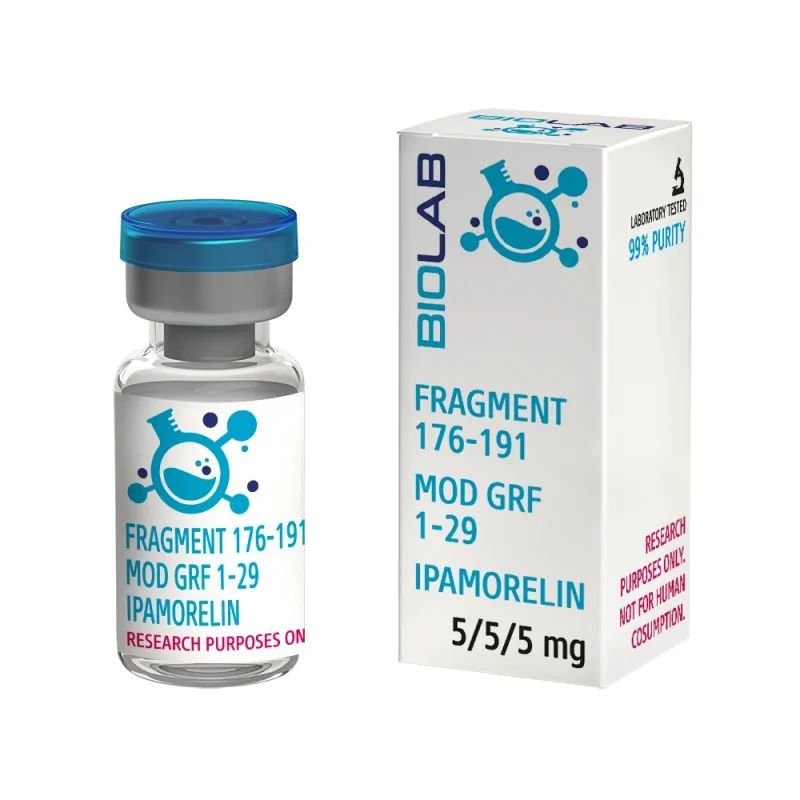
Buy Fragment 176-191 + MOD GRF 1-29 + Ipamorelin Mix 5/5/5 mg
Researchers investigating peptide combinations may be interested in multi-component formulations that bring several distinct peptide sequences together in a single research material. Fragment 176-191, MOD GRF 1-29 and Ipamorelin are individually studied synthetic peptides with different structural characteristics. This 5/5/5 mg presentation provides a defined combination for laboratory research involving peptide chemistry, analytical testing and experimental biological models.
For UK researchers, clear product identification and responsible research-use information are essential when selecting experimental peptide materials. This formulation should be considered strictly for laboratory investigation and not as a medicine, nutritional supplement or product for human or veterinary administration.
What Is This Peptide Combination?
The formulation contains three research peptides: Fragment 176-191, MOD GRF 1-29 and Ipamorelin. Each component represents a different area of peptide research.
Fragment 176-191 corresponds to a section of the C-terminal region of human growth hormone. Research into this fragment has examined its biochemical properties and potential involvement in experimental lipid-metabolism models. It is distinct from complete growth hormone and should not be described as equivalent to the intact hormone.
MOD GRF 1-29 is a synthetic analogue based on the first 29 amino acids of growth hormone-releasing hormone. Researchers have investigated GHRH-related peptides to better understand peptide signalling and growth-hormone secretory pathways.
Ipamorelin is a synthetic growth-hormone secretagogue peptide that has been studied in experimental models for its interaction with pathways associated with growth-hormone release. Research findings involving these compounds remain dependent on the experimental model, protocol and conditions used.
Research Applications
A combined formulation can be relevant to researchers exploring interactions between structurally different peptide compounds. Laboratory investigations may focus on analytical characterisation, stability, peptide chemistry or comparative biological research.
Potential research areas include:
- Peptide identification and characterisation
- Analytical method development
- Stability and degradation studies
- Structure-function investigations
- Experimental peptide signalling
- Comparative peptide research
- Laboratory formulation studies
- In-vitro research models
Researchers should design experiments according to validated laboratory procedures and should not infer human outcomes from preclinical or biochemical observations.
5/5/5 mg Product Format
This presentation contains three components at 5 mg each, creating a clearly defined 5/5/5 mg research formulation. A combination format may be useful for laboratories investigating multiple peptide sequences within related experimental programmes.
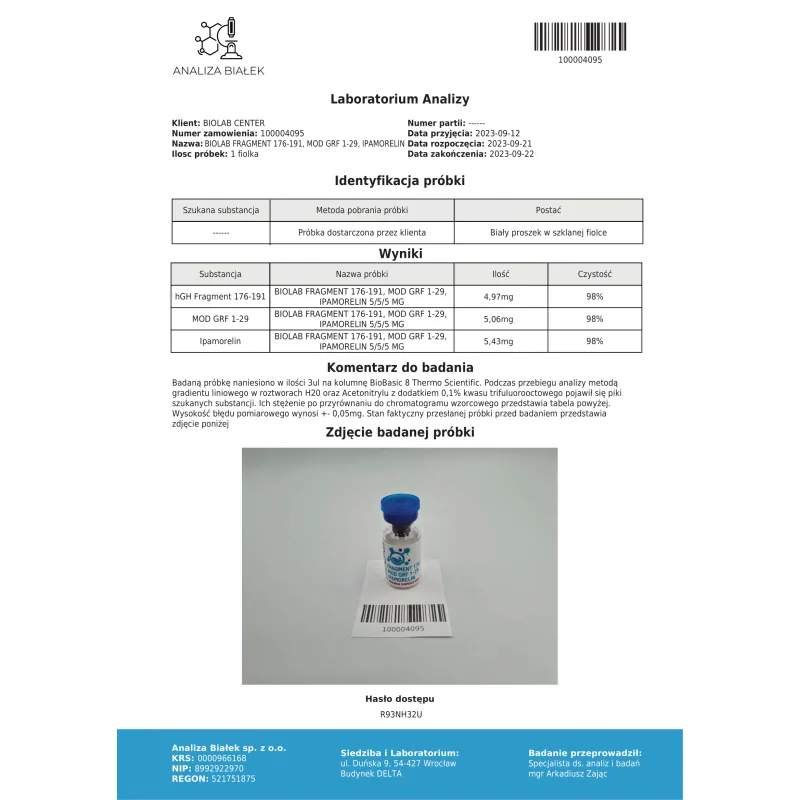
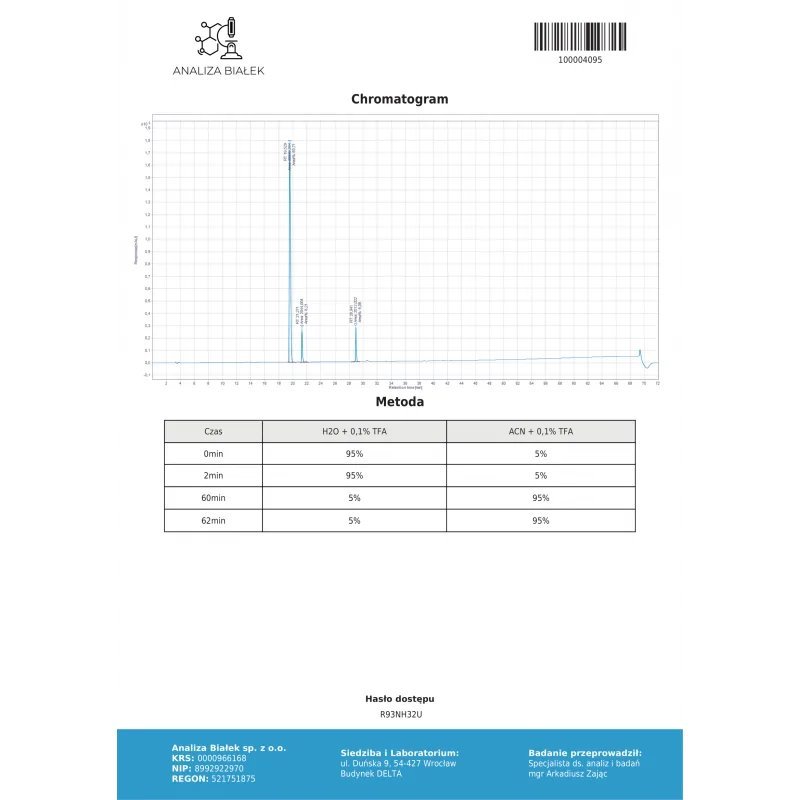
Before beginning research, users should verify the product identity, batch information, analytical documentation and applicable handling instructions. A certificate of analysis, where provided, can assist researchers in evaluating material characteristics and maintaining appropriate laboratory records.
Why Research Peptide Blends?
Combination peptide research can allow laboratories to investigate several molecular structures within a controlled experimental framework. Studying compounds individually and in combination may help researchers compare analytical behaviour, stability characteristics and experimental responses.
However, the presence of multiple compounds does not establish that they have a synergistic effect. Any interaction between components must be demonstrated through appropriate experimental testing. Researchers should therefore avoid assuming that combining peptides automatically produces a particular biological outcome.
This distinction is especially important when interpreting information from online sources, where experimental observations may sometimes be presented as established benefits.
Quality Considerations for UK Laboratories
When sourcing research materials in the United Kingdom, laboratories should consider supplier transparency, product identification and available analytical information. Clear labelling can help researchers distinguish individual components within a multi-peptide formulation.
Useful quality information may include batch or lot identification, stated quantity, purity information, storage recommendations and relevant analytical testing. Researchers should retain appropriate documentation as part of their laboratory records.
A responsible research supplier should also avoid presenting experimental compounds as approved medicines or making unsupported claims about their effects in people.
Laboratory Handling and Storage
Research personnel should follow the supplier’s current technical documentation together with their institution’s laboratory safety procedures. Storage conditions should be checked before use because peptide stability can depend on environmental factors and formulation characteristics.
Researchers should maintain suitable labelling and controlled storage and should use appropriate laboratory practices when preparing or analysing samples. Any reconstitution or experimental preparation should follow validated institutional procedures rather than assumptions based on online information.
Selecting a Research Supplier
Choosing a suitable supplier involves evaluating more than product quantity. Researchers should consider whether the supplier provides consistent product descriptions, transparent documentation and clear research-use limitations.
For combination products, accurate identification of each component is particularly important. Laboratories may also wish to assess packaging integrity, traceability and available analytical information before incorporating material into a research programme.
Reliable documentation supports reproducibility and helps researchers distinguish verified product information from unsupported promotional statements.
Order for Laboratory Research
Researchers searching for Fragment 176-191 + MOD GRF 1-29 + Ipamorelin mix 5/5/5 mg may use this format when their laboratory programme requires a defined combination of three peptide materials. The formulation can be considered for controlled research involving peptide chemistry, analytical testing and experimental biological investigation.
The product should only be used within an appropriate research environment and in accordance with applicable institutional requirements. It should not be represented as a clinically approved treatment or used for self-administration.
Important Research Disclaimer
This research material is intended solely for laboratory and scientific research purposes. It is not intended for human or veterinary use, diagnosis, treatment, cure or prevention of disease. Research findings involving individual peptides or related compounds should not be interpreted as proof of safety or efficacy in humans. UK researchers are responsible for complying with applicable laws, institutional policies, laboratory procedures and relevant safety requirements.