Buy P-21 (P021) Spray 5 mg – Research Peptide for Laboratory Studies
P-21, also known as P021, is an experimental peptide that has attracted interest in neuroscience and molecular biology research. Researchers investigating neurotrophic signalling, peptide structure, cellular pathways, and experimental models of neurological function may encounter P-21 within the scientific literature.
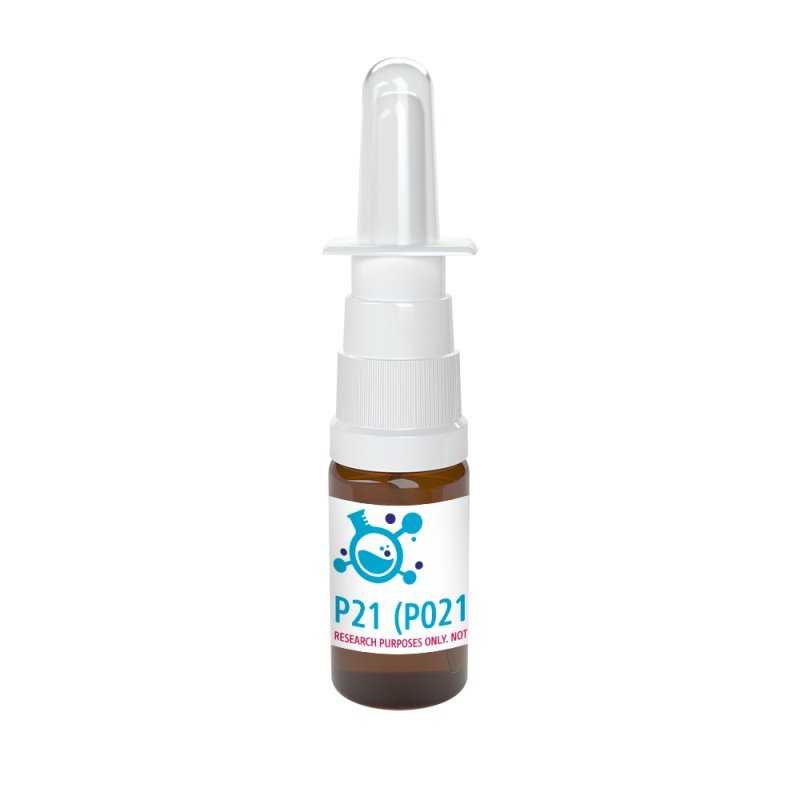
Our P-21 (P021) Spray 5 mg is presented strictly as a research material for qualified laboratory environments. The spray format provides a practical presentation for research workflows where the physical characteristics of a peptide formulation are part of the experimental design. It is not marketed as a medicine, supplement, or approved therapeutic product.
What Is P-21 (P021)?
P-21 is a synthetic peptide associated with experimental research into neurotrophic mechanisms and signalling pathways. Preclinical research has investigated P-21 in animal and laboratory models, particularly in relation to pathways involving neurotrophic factors and neuronal biology.
The compound has been discussed in scientific research because of its relationship with ciliary neurotrophic factor-related signalling. However, findings from experimental models should be interpreted carefully. Results observed in laboratory or animal studies cannot automatically be transferred to humans, and P-21 should not be represented as an established treatment for neurological or cognitive conditions.
For researchers, its primary relevance lies in studying molecular mechanisms and biological responses under controlled experimental conditions.
Research Applications
Experimental work involving P-21 may be relevant to several areas of neuroscience and peptide research. Depending on the study design, researchers can investigate molecular interactions, cellular signalling, peptide behaviour, and responses within validated research models.
Potential areas of investigation include:
- Neuropeptide research
- Neurotrophic signalling studies
- Molecular biology
- Cellular pathway investigations
- Peptide structure-function research
- Experimental neuroscience
- Protein and peptide interactions
- Laboratory model research
- Analytical peptide studies
These categories describe potential research interests rather than established clinical applications. Researchers should assess published evidence independently and design experiments according to appropriate scientific and institutional standards.
P-21 (P021) Spray 5 mg Format
The 5 mg spray presentation is intended to provide laboratories with a defined research quantity in a convenient formulation. Researchers should examine the product specification and accompanying documentation before incorporating the material into an experimental workflow.
Important considerations when sourcing an experimental peptide include identity, purity, batch information, formulation characteristics, storage requirements, packaging integrity, and available analytical documentation.
Laboratories should maintain appropriate records for research materials and, where applicable, document batch identifiers alongside experimental observations. Good traceability can support reproducibility and make it easier to evaluate differences between experiments.
Because formulation characteristics can influence laboratory results, researchers should use validated procedures appropriate to their specific study and avoid assuming that findings obtained with another formulation will necessarily apply to the material being investigated.
Why Study Experimental Neurotrophic Peptides?
Neuroscience researchers continue to investigate peptides because relatively small changes in molecular structure can influence biological interactions and signalling behaviour. Experimental compounds can therefore provide useful tools for examining specific pathways in controlled laboratory models.
P-21 has been investigated in preclinical research involving neurotrophic signalling and neuronal processes. Such research can contribute to a broader understanding of how peptides interact with biological systems.
At the same time, an important distinction exists between preliminary research and clinical evidence. A compound may generate interesting findings in cell or animal studies without demonstrating safety, effectiveness, appropriate dosing, or therapeutic value in humans. Researchers should therefore rely on peer-reviewed evidence and carefully distinguish established observations from hypotheses requiring further investigation.
Quality Considerations for UK Researchers
Researchers sourcing peptide materials in the UK should look for transparent product information and clear research-use specifications. A professional product listing should provide sufficient information for laboratories to determine whether the material is appropriate for their intended scientific application.
Relevant documentation may include product specifications, batch information, analytical testing, purity data, storage guidance, and safety information where available. Researchers should review documentation associated with the actual batch rather than relying on generic information from unrelated products.
The regulatory status of experimental compounds is also important. Materials that do not hold appropriate UK marketing authorisation should not be promoted as licensed medicines or represented as clinically approved treatments. UK businesses should ensure that product descriptions and advertising comply with applicable requirements.
Laboratory Handling and Storage
Proper handling is an essential part of peptide research. Researchers should follow the manufacturer’s storage instructions and established laboratory procedures. Environmental factors such as temperature, moisture, light, and repeated handling may affect peptide integrity depending on the formulation.
Laboratories should use appropriate protective equipment and established safety procedures when handling experimental materials. Any reconstitution, dilution, analytical testing, or other preparation should be performed by appropriately trained personnel using validated laboratory methods.
Choosing a Research Supplier
When evaluating suppliers, researchers should consider transparency, product documentation, packaging, batch traceability, and clearly stated intended use. A reliable research supplier should distinguish scientific information from promotional or medical claims.
Clear descriptions can also help researchers understand exactly what is being supplied and reduce confusion between experimental materials and regulated pharmaceutical products.
Order P-21 (P021) Spray 5 mg for Research
For qualified laboratories exploring neurotrophic signalling, peptide chemistry, molecular biology, and experimental neuroscience, this 5 mg spray presentation offers a defined research-format material for controlled laboratory investigation.
Researchers should review all available specifications before ordering and confirm that the product is appropriate for their intended project. Experimental work should be conducted in suitably equipped facilities and according to institutional safety and research requirements.
Important Research Disclaimer
This product is supplied strictly for research and laboratory use. It is not intended for human or veterinary consumption, self-administration, diagnosis, prevention, or treatment of any disease or medical condition. P-21 remains an experimental research compound, and preclinical findings should not be interpreted as proof of clinical safety or effectiveness.
Researchers are responsible for ensuring that purchasing, storage, handling, and experimental use comply with applicable UK laws, institutional policies, and laboratory safety requirements. The information on this page is provided for scientific and educational purposes and should not be considered medical advice.