Buy TRH 10 mg – Research Peptide for Laboratory Studies
Thyrotropin-releasing hormone, commonly abbreviated as TRH, is a naturally occurring tripeptide that has been extensively studied in endocrinology and neurobiology. Because of its role in regulating pituitary signalling and its presence within the central nervous system, TRH remains an important subject for laboratory research involving peptide hormones, neuroendocrine pathways and receptor activity.
For UK laboratories investigating peptide biology, a defined 10 mg research presentation can provide a convenient quantity for controlled analytical and experimental work. This material is intended exclusively for scientific research and should not be presented as an approved medicine or used for human or veterinary administration.
What Is TRH?
TRH, also known as thyrotropin-releasing hormone, is a small peptide composed of three amino acids. It was originally identified through research into the hypothalamic regulation of thyroid-stimulating hormone. Subsequent scientific work demonstrated that TRH has a much broader distribution and has been investigated in several areas of neuroendocrine research.
The peptide is associated with communication between the hypothalamus and pituitary gland. In physiological research, TRH is studied for its ability to influence the release of thyroid-stimulating hormone and prolactin. Researchers have also examined TRH-related signalling within the brain and other tissues.
Its simple molecular structure makes the compound particularly useful for studies examining relationships between peptide structure, receptor recognition and biological signalling.
Research Applications
Laboratories may investigate TRH within a variety of controlled experimental settings. Research can focus on its biochemical characteristics, receptor interactions, signalling mechanisms or relationships with endocrine pathways.
Potential research areas include:
- Neuroendocrine signalling studies
- Peptide hormone research
- Thyroid-axis investigations
- Receptor-binding experiments
- Structure-function analysis
- Peptide stability research
- Analytical characterisation
- Comparative endocrine studies
- Experimental neuroscience
Research involving this compound should be interpreted according to the specific model and methodology used. Findings from biochemical, cellular or animal experiments cannot automatically be translated into established human effects.
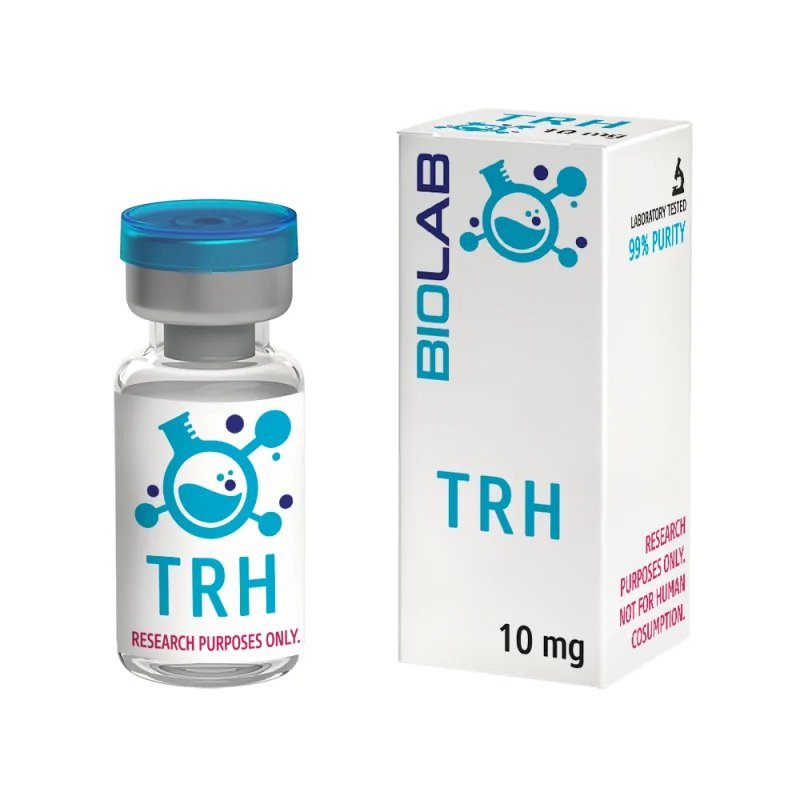
TRH 10 mg Research Format
The 10 mg presentation offers researchers a defined quantity of material for laboratory investigations. A clearly specified amount can be useful when planning analytical procedures, comparative experiments or controlled peptide studies.
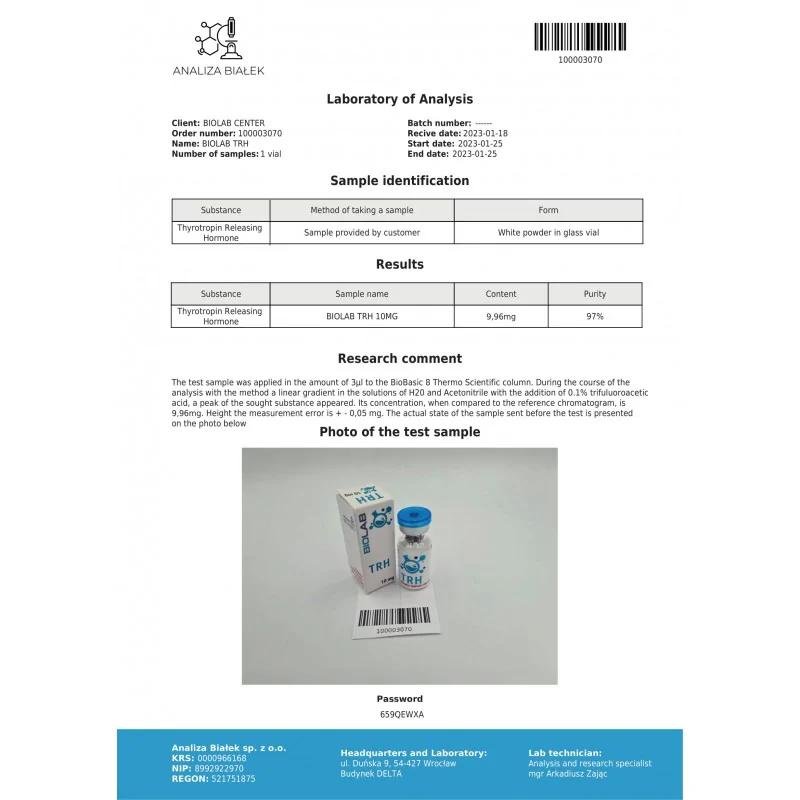
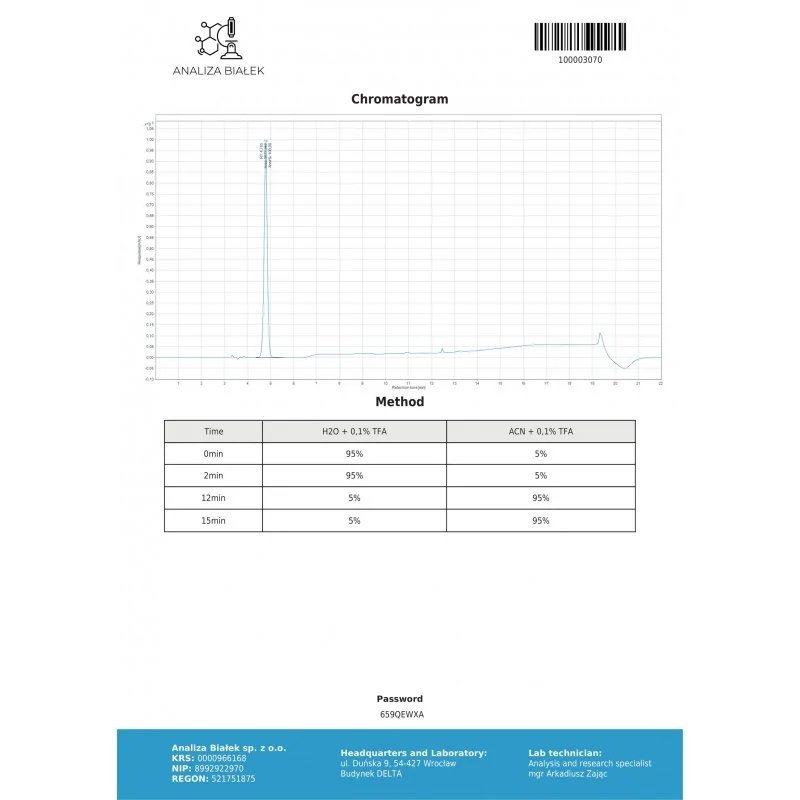
Researchers should review all available product documentation before beginning laboratory work. Information such as compound identity, batch details, purity data and analytical testing can help laboratories assess whether a research material is appropriate for a particular protocol.
Accurate record-keeping is also valuable for maintaining reproducibility across experiments and comparing results obtained from different batches or experimental conditions.
Why Study Thyrotropin-Releasing Hormone?
TRH has historical importance in endocrinology because research into the peptide helped establish mechanisms connecting hypothalamic signalling with pituitary hormone release. Its continued investigation provides researchers with an opportunity to examine fundamental processes involved in neuroendocrine communication.
Beyond its classical endocrine role, scientists have studied TRH in relation to central nervous system signalling and other physiological pathways. This broader research history makes the peptide relevant to laboratories studying interactions between hormonal and neuronal systems.
Because TRH is a naturally occurring biological molecule, controlled research can also help scientists understand how short peptide structures participate in complex signalling networks.
Quality Considerations for UK Researchers
When sourcing research peptides in the United Kingdom, laboratories should assess product transparency and documentation before purchase. Clear identification of the compound and quantity is particularly important for scientific work.
Researchers may wish to consider available certificates of analysis, batch or lot information, stated purity, packaging integrity and storage recommendations. Reliable documentation supports appropriate sample management and can contribute to more reproducible research.
Research suppliers should also distinguish factual scientific information from medical claims. Experimental peptides should not be marketed as established treatments where the relevant regulatory authorisation does not exist.
Laboratory Handling and Storage
TRH should be handled according to the supplier’s current technical documentation and the research institution’s established laboratory procedures. Storage conditions should be reviewed before use because peptide stability can depend on environmental conditions and formulation.
Researchers should maintain appropriate labelling and controlled storage throughout the research process. Preparation, analytical testing and other laboratory procedures should be conducted by appropriately trained personnel using suitable equipment and safety practices.
Choosing a Research Supplier
A suitable research supplier should provide clear product information, transparent specifications and appropriate quality documentation. Laboratories can benefit from selecting suppliers that clearly identify research materials without making unsupported claims about clinical outcomes.
For UK researchers, traceability and consistent documentation can be particularly useful when materials are incorporated into longer-term experimental programmes. Reviewing technical information before ordering can help laboratories select materials that align with their research requirements.
Order TRH for Laboratory Research
Researchers interested in thyrotropin-releasing hormone research may consider a 10 mg presentation when a defined quantity is appropriate for their laboratory programme. The material can support investigations into peptide chemistry, neuroendocrine signalling and related experimental research.
The compound should be treated solely as research material and used within an appropriate laboratory environment. It should not be described as a therapeutic product or used for self-administration.
Important Research Disclaimer
This product is supplied for laboratory research purposes only. It is not intended for human or veterinary use, diagnosis, treatment, cure or prevention of any disease or medical condition. Scientific findings concerning TRH should be interpreted within the context of the relevant experimental model and do not establish clinical safety or efficacy. Researchers are responsible for complying with applicable UK regulations, institutional requirements and laboratory safety procedures.